Lesson 6 | Interpretational Stances
To Invite Scrutiny
Everyone is open to scrutiny...so they think. They are open—until it comes, and then they realize they are not.
It is 6:00 pm and Amber, mother of two, is serving her family the spaghetti and meatballs for the first time ever. Silence follows the initial few bites as everyone processes their first impressions. “What do you think?” she asks (opening herself to scrutiny). “It could do with a bit more sauce,” says 11 year-old Tyler, and three year-old Isaac blurts, “It’s too chewy!” Ruffled, Amber replies, “Well, if you can’t say something nice, then don’t say anything at all.”
Was Amber really looking for scrutiny? Answer: No. Rather, she was fishing for a compliment. But if she were to listen to scrutiny, wouldn’t her spaghetti and meatballs be better next time? What are we really after—compliments or transformation?

To invite scrutiny is to grow; those who are open to correction will improve.
But what does it take? The willingness to put your thoughts or work out there for examination. It feels risky because it hurts to expose flaws we’d rather ignore. It feels humbling because the bubble of imagined greatness we've built around ourselves may be popped. And...it feels beneficial because it leads us to clear thinking and better work.
If inviting scrutiny is the goal, then clear interpretational stances are the means. Indeed, without a clear stance there’s not even enough substance to disagree with. Ambiguity might feel safe, but the courageous will choose to communicate with clarity.
So is your paraphrase definitive enough to be poked at?
You Know You’ve Taken a Strong Interpretational Stance When...
1. Your paraphrase clarifies ambiguous language that can be taken multiple ways.
Consider these two paraphrases of 1Co 15:20.
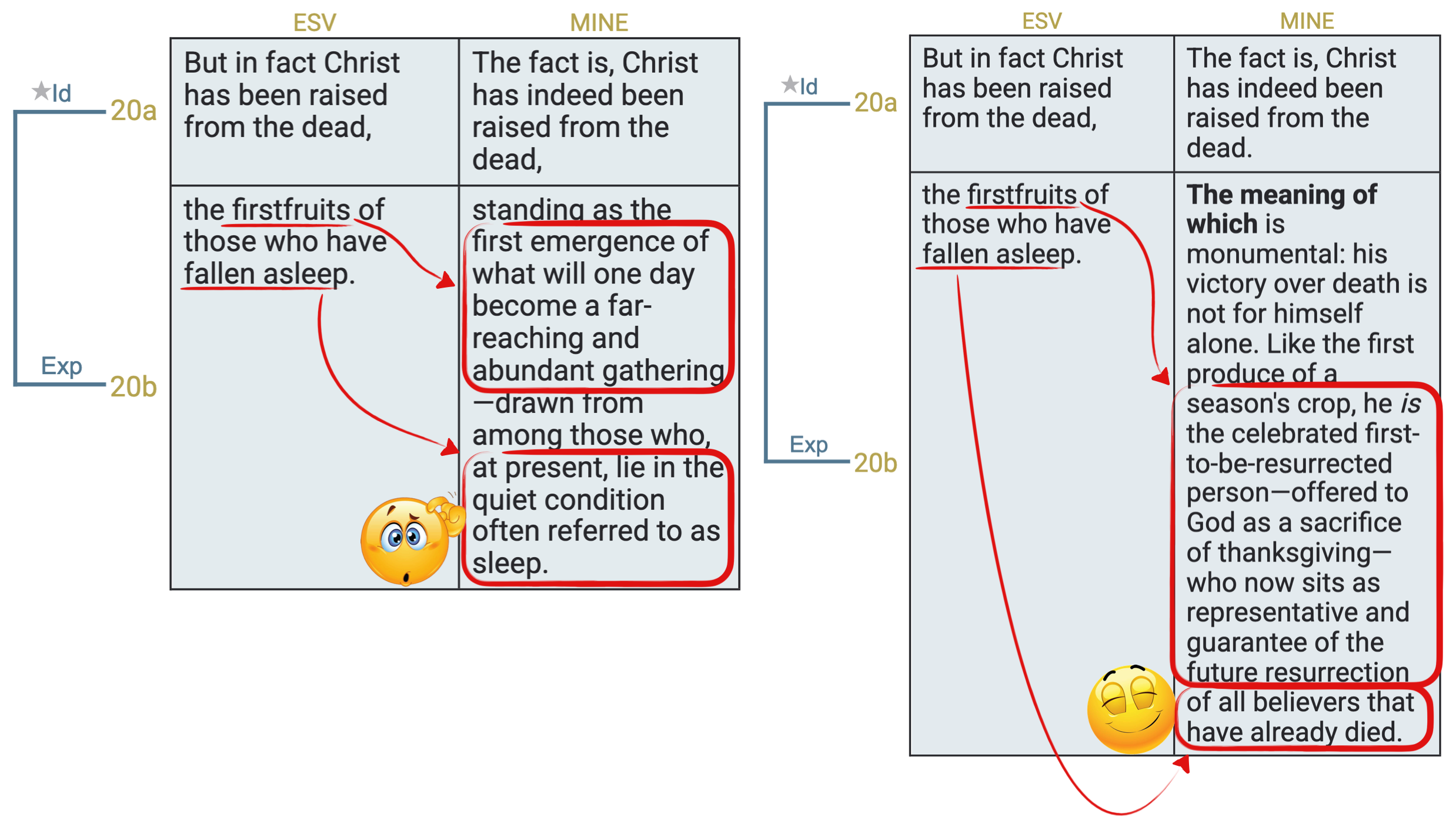
The lefthand paraphrase unhelpfully leaves things ambiguous. What “gathering” is being referred to? Does “asleep” mean soul sleep, purgatory, bodily death, or something else? Does it apply to believers or everybody? This poor example of a paraphrase does not answer any of these questions whereas the righthand example does.
2. You’ve made a theological position explicit in your paraphrase.
Consider these two paraphrases of 1Co 15:24–26.
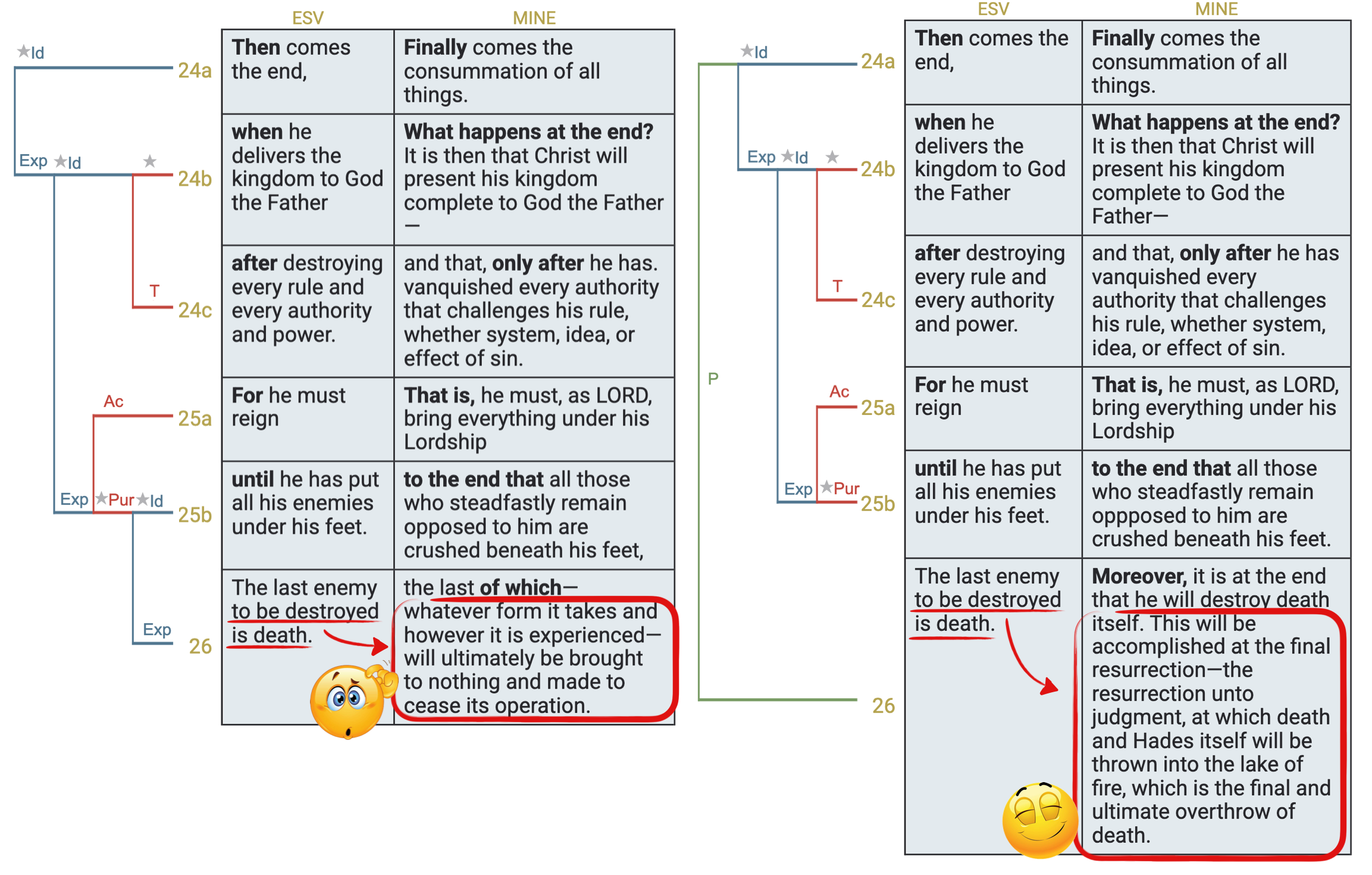
The concept of death’s final destruction is weighty theology…but only if we know what we’re talking about! The lefthand paraphrase of v. 26 can hardly be agreed with or opposed because it is so vague, despite its many words. On the other hand, the righthand paraphrase takes a position on how this verse fits into the Bible’s broader teaching on the end of the world. (Notice that it is also bracketed with a different relationship in light of the understanding presented.)
Further Ideas To Explore:
You know you’ve taken a strong interpretational stance when...
- You’ve clarified a logical connection that fits multiple relationship categories.
- You’ve inserted background knowledge for the explicit purpose of framing a phrase.
- You’ve chosen to emphasize a particular implication over other possible implications.
- You communicate tone, emotion, or motive that is open to interpretation.
- You’ve framed a narrative that could have been framed differently.
Paraphrasing Principle:
You know you've taken a strong interpretational stance when you can imagine somebody with a different interpretation disagreeing with you!