Lesson 7 | Special Cases
Cultural Perspective
Our final special case involves a situation not encountered in the text of Scripture, but in the world. Language and communication is inherently culture-bound. You live in one of those cultures. And you may also have opportunity to communicate God’s word cross-culturally. So we will do well to think a bit about the cultural incarnation of our paraphrasing.
Paraphrasing Principle:
It is good and right to paraphrase a passage with the language of a particular culture, so long as it effectively communicates the meaning of a text.
I’ve asked some friends who are (or have been) immersed in a culture different than my own to write a paraphrase that accurately and appropriately expresses the meaning of Psalm 69:8–13. We offer these examples to help stir your interest in effectively communicating the gospel to all those around you.
Note: As you read the paraphrases below, notice that the cultural form does not influence the meaning of the text. For this reason, the brackets are identical. But while we are free to customize the cultural language of our paraphrase, we mustn’t import cultural assumptions. That would change the meaning and will be addressed on the “Stumped” step of this lesson.
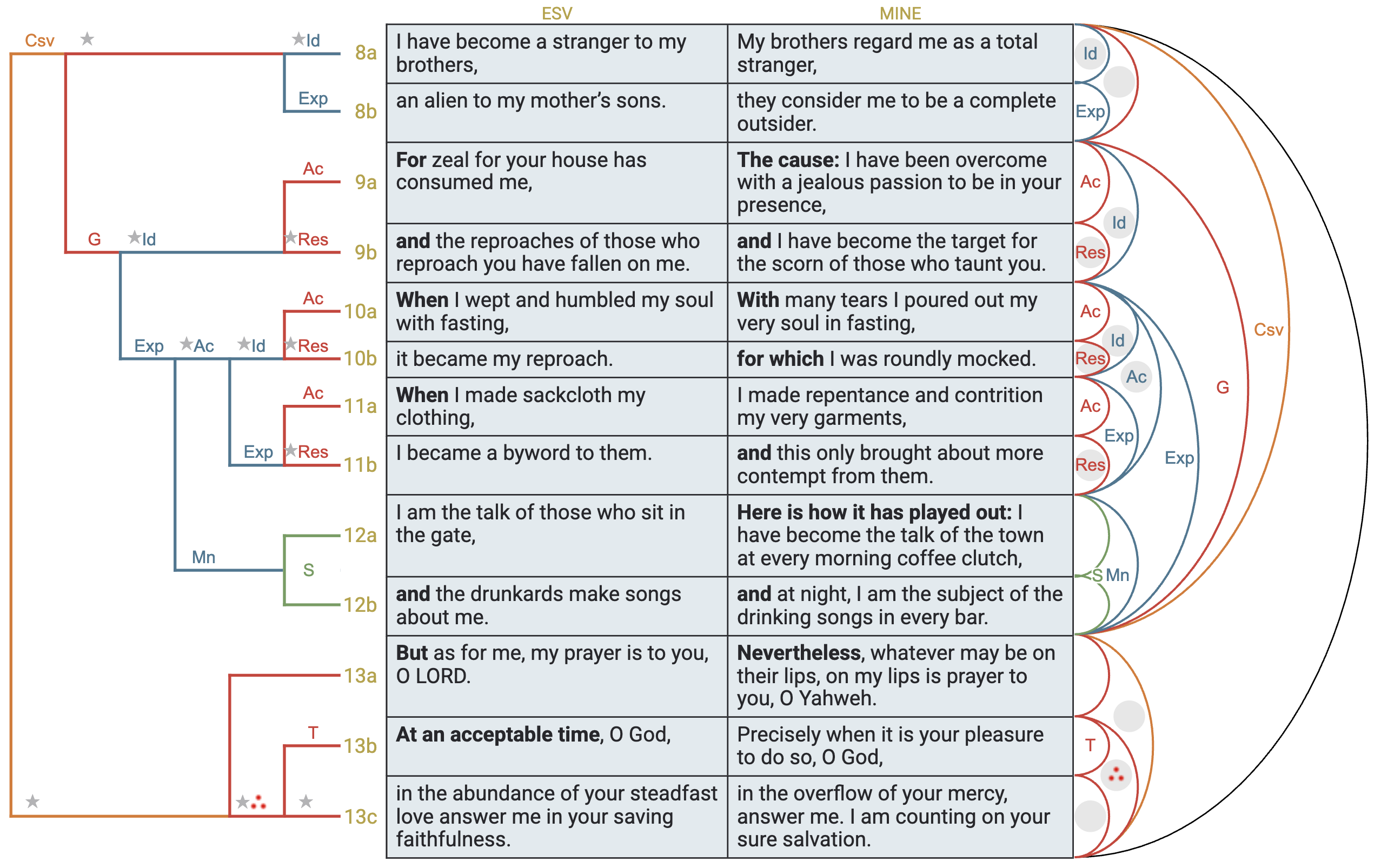
Small-Town America Paraphrase: Psalm 69:8-13

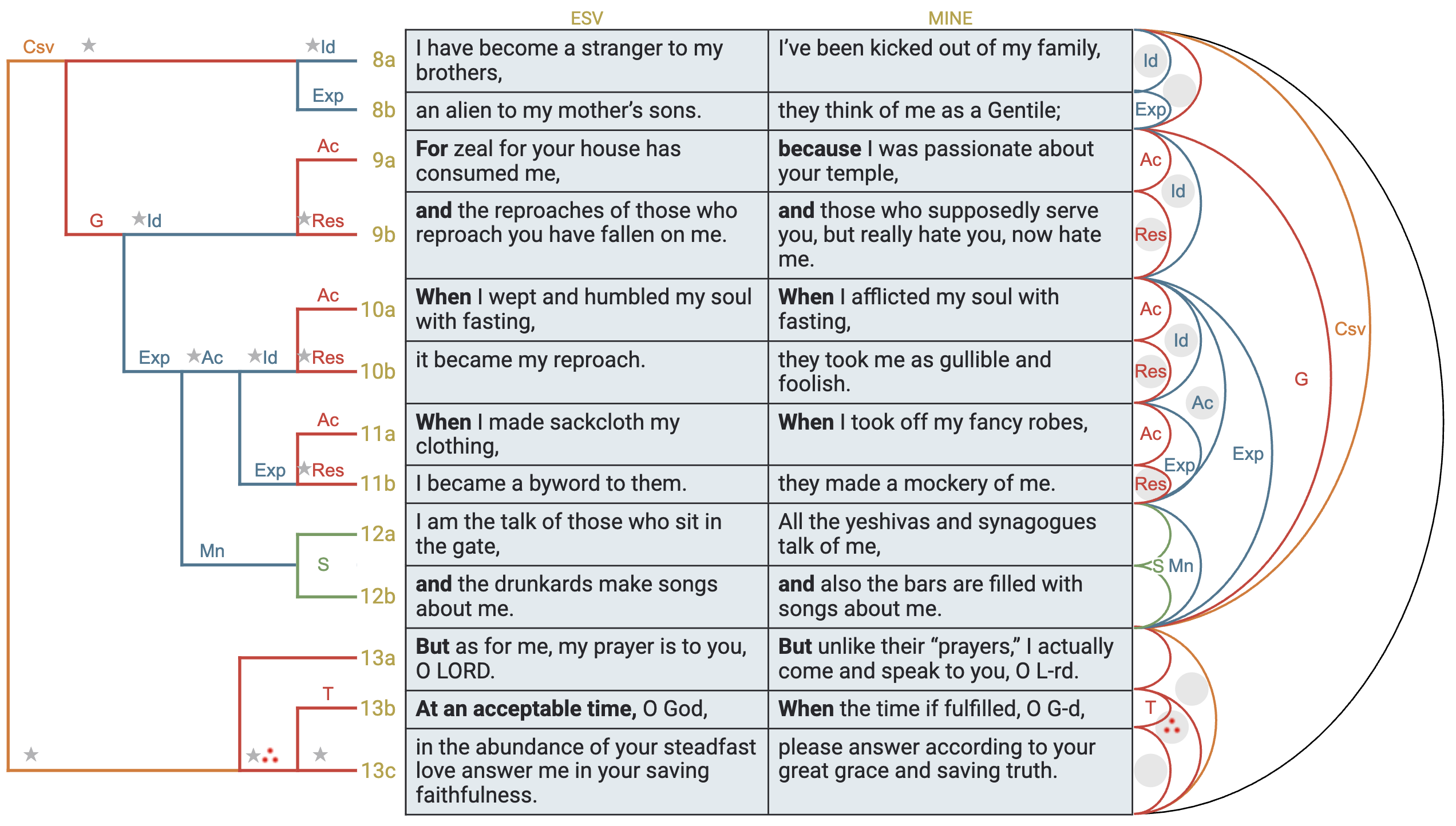
Modern Religious Israeli Paraphrase: Psalm 69:8-13

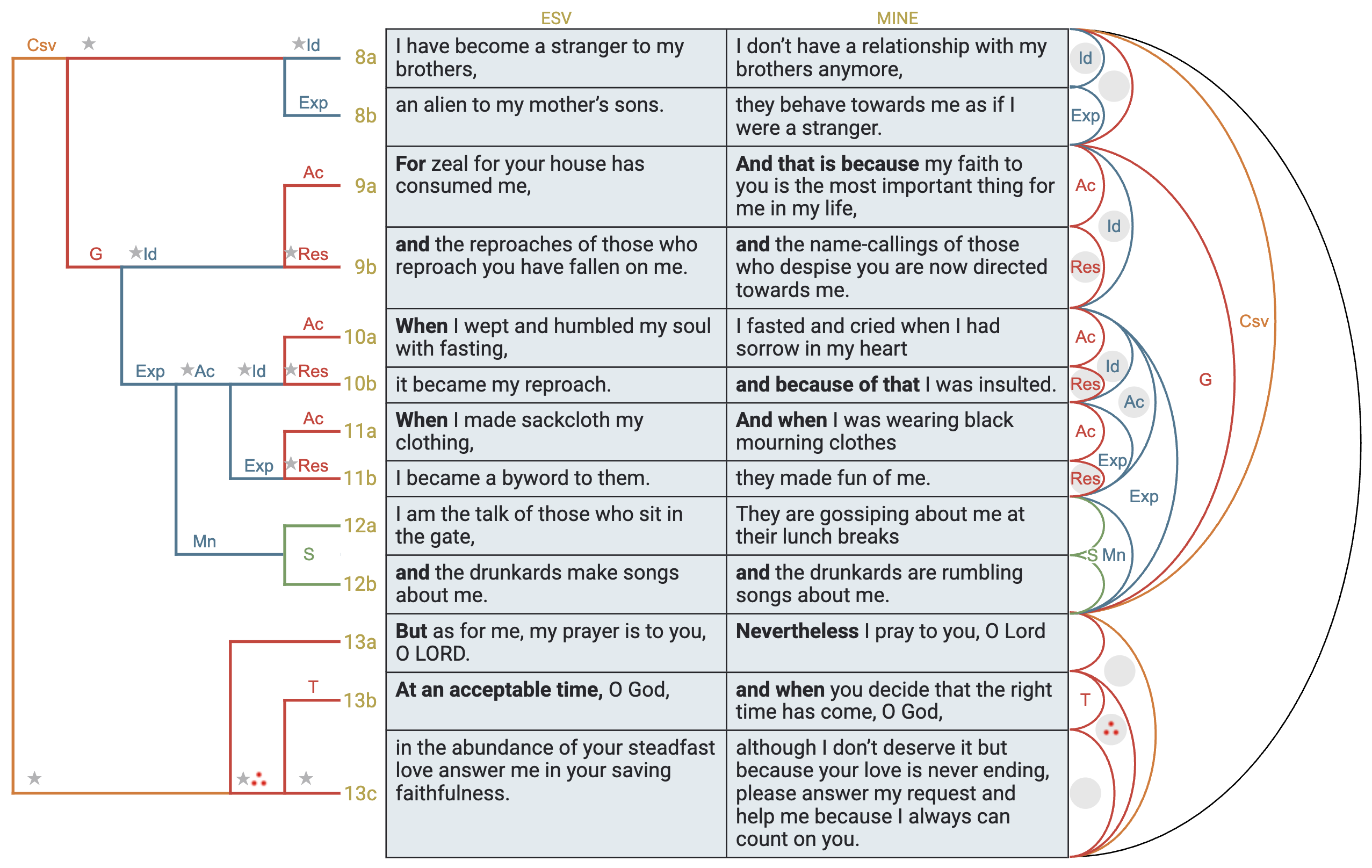
West German Small Town Paraphrase: Psalm 69:8-13

Southern California Gen-Z Middle School Paraphrase: Psalm 69:8-13
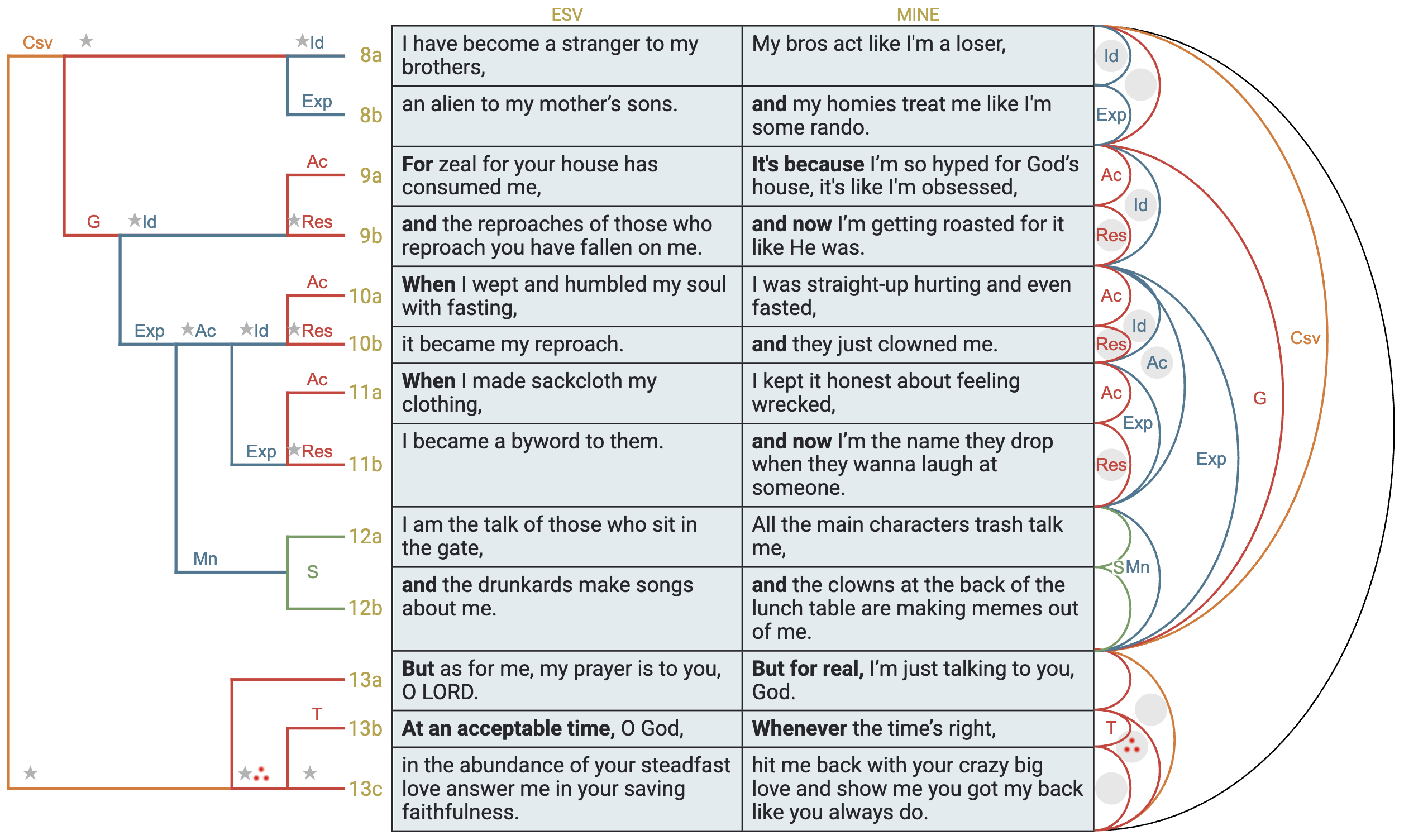

Note: The very last paraphrase, though not written by a middle schooler, was officially reviewed and approved by my 7th grader.