Lesson 8 | Sub-Point Summaries
Lesson Objectives
There are moments when a detective realizes that the perpetrator did not work alone. As the full scope of the crime comes into view, he must start zeroing in on the key players.
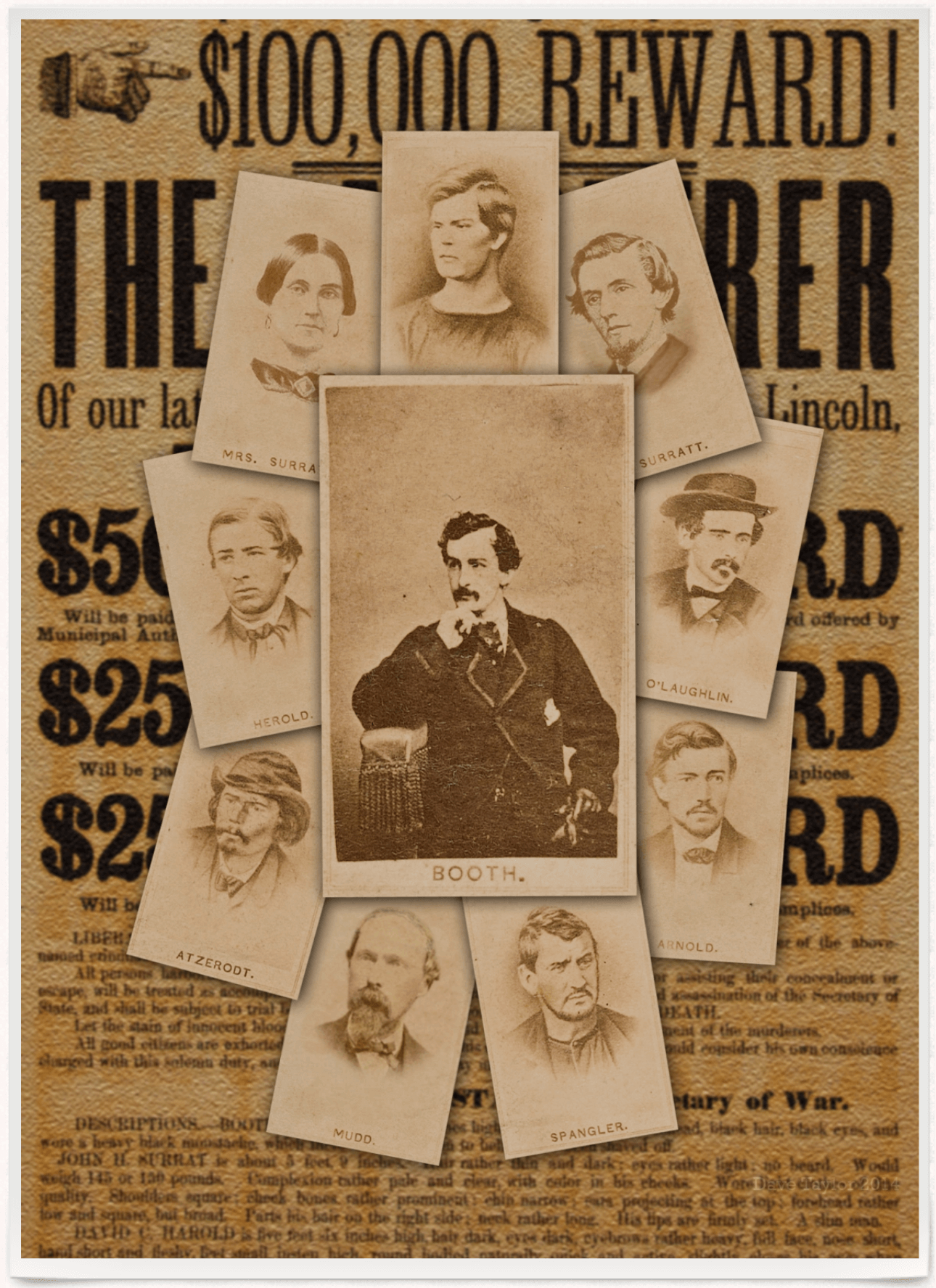
The investigation into the conspirators of the Lincoln assassination was one of the most ruthless in history. Within hours of Lincoln's final breath, Secretary of War Edwin Stanton initiated a manhunt, appointing Lafayette Baker from the National Detective Police to lead the investigation. Less than six hours after the attack, investigators descended on Mary Surratt's home—a well known lodging place for John Wilkes Booth while in D.C. Two days later Surratt and Lewis Powell were arrested there after an incriminating picture of Booth was found hidden behind another photograph. That same day, three more conspirators were arrested—some identified by theatergoers from the night of the assassination, and others implicated by letters found among Booth's possessions.
On April 21, six days after the assassination, Secretary of War Edwin Stanton issued a proclamation in the The Alexandria Gazette, offering large rewards for the apprehension of the remaining conspirators.
‘All person harboring or secreting the said persons, or either of them, or aiding or assisting their concealment or escape, will be treated as ACCOMPLICES in the murder of the President and the attempted assassination of the Secretary of State, and shall be subject to trial before a Military Commission and the punishment of DEATH!
Let the stain of innocent blood be removed from the land by the arrest and punishment of the murderers!
All good citizens are exhorted to aid public justice on this occasion. Every man should consider his own conscience charged with this solemn duty, and rest neither night nor day until it be accomplished.’
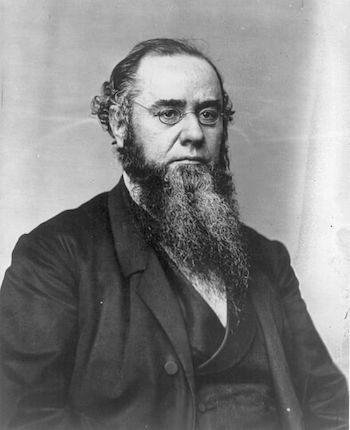
Edwin Stanton
Secretary of War
On April 26—twelve days after the assassination—John Wilkes Booth was shot and killed by police on a Virginia farm. In less than two weeks, Stanton and Baker had zeroed in on almost all the key players and developed clear picture of the extent of the conspiracy's scope.¹
Writing sub-point summaries of Scripture is a lot like uncovering the conspirators of a crime. In this phase of your study, the role of each section of a passage comes into sharp focus, enabling it to be summarized in just a few words—not unlike how the role of each conspirator comes into sharp focus as the case nears its close. With every piece summarized, you can begin connecting the big-picture dots that reveal the passage's main point until finally, through the rigor of summarizing, you are able to state that main point with precision.
A Major Shift in the Course
Do you remember the three major parts of the investigative process that we laid out in Lesson 1?
Build Your Theory: Your bracket/arc is your hypothesis—your initial take on what the author meant. Test Your Theory: Your paraphrase is your testing ground—a place for fleshing out mistakes and considering other possible interpretations. Prove Your Theory: Your main point summary is your conclusion—a demonstration of your understanding of the passage and ability to communicate it effectively.
With Lesson 8, we transition from paraphrasing to summarizing. It is time to begin working on proving your theory. We’ll start by learning to utilize sub-point summaries in your arc/bracket.
Specific Goals
- Illustrate the big picture of sub-point summarizing.
- Understand the purpose and function of the grey dot in identifying supports and primary propositions.
- Learn how to write summaries of small pieces within a passage.
- Prove next level relationships using sub-point summaries.
- Discern what not to include in a sub-point summary.