Lesson 10 | Main Point Summary
Stumped: Reporting the Process
When all the work is said and done, and it is time to present a final report, one temptation remains for the a detective—to report the process rather than the conclusions.

In the stumped step of the last assignment, we learned about Detective Gregson’s blunder in solving Holmes’ case of “A Study in Scarlet.” There is a one more feature of this particular event that fits the error that we are addressing in Lesson 10.
A Study in Scarlet finds three detectives on the hunt for a murderer. Each takes a different direction: Lestrade goes after the victim’s partner, Gregson researches the victim’s living quarters, and Holmes pursues the victim’s past relationships. Midway through the investigation, Gregson bursts into Holmes rooms on Baker Street and proudly reveals that he has solved the case and has the perp under lock and key. As he presents his final report, it immediately becomes evident that he has the wrong man. Gregson’s mistake becomes apparent as he narrates the classic error of “reporting the process.” In the summary of Gregson’s narrative below, notice that he is consumed with his steps, but entirely unaware of their meaning.
Gregson’s First Step: Well, I went to Underwood, and asked him if he had sold a hat of that size and description. He looked over his books, and came on it at once. He had sent the hat to a Mr. Drebber (the victim), residing at Charpentier’s Boarding Establishment, Torquay Terrace. Thus I got at his address.
Gregson’s Second Step: “I next called upon Madame Charpentier,” continued the detective. “I found her very pale and distressed…The daughter burst into tears. I felt more than ever that these people knew something of the matter.”
Madame Charpentier's testimony: On one occasion he (Drebber) actually seized [my daughter, Alice] in his arms and embraced her—an outrage which caused his own secretary to reproach him for his unmanly conduct…Poor Alice was so frightened that she shrunk away from him, but he caught her by the wrist and endeavoured to draw her towards the door. I screamed, and at that moment my son Arthur came into the room. What happened then I do not know. I heard oaths and the confused sounds of a scuffle. I was too terrified to raise my head. When I did look up I saw Arthur standing in the doorway laughing, with a stick in his hand. “I don’t think that fine fellow will trouble us again,” he said. “I will just go after him and see what he does with himself.” With those words he took his hat and started off down the street.
Gregson’s Final Move: Of course after that there was nothing more to be done. I found out where Lieutenant [Arthur] Charpentier was, took two officers with me, and arrested him.
—Arthur Conan Doyle, “Sherlock Holmes Remastered: A Study in Scarlet,” headings added.
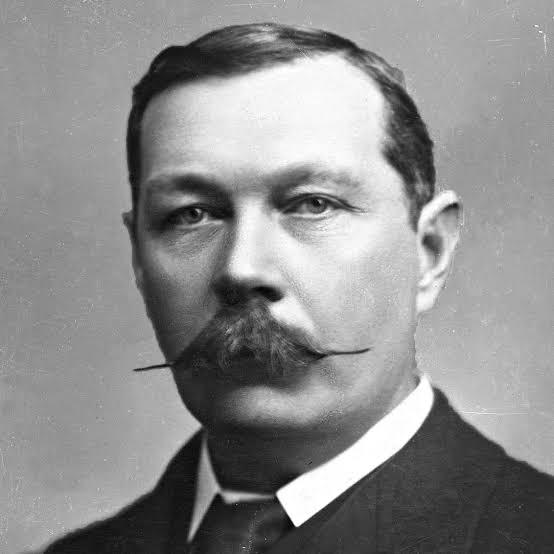
Immediately after Gregson terminates his lofty recounting of the affair, Lestrade entered the scene with a piece of intelligence that took the rug out from under Gregson’s entire conclusion. He had reported the right steps, telling everybody what he did, but had failed to connect what he did with the clues of the original murder scene.
The same is tempting for the Bible student who gets so excited to report his process that he fails to land the conclusions on the hearts of the listeners. Bible students who fall into this error will receive similar responses across the board—”So what?! The steps are great: the relationship labels, the observations, the words looked up and cross-referenced, the sharp paraphrase, the summary. But I don’t want to hear what you did; I want to hear what it says about God!”
The church is full of people who simply will not be interested in the distinction between interpretation A and interpretation B, and will not be concerned with your understanding of the conjunction in question that determines one or the other. However, they are interested in knowing what your interpretation (let's say B) tells them about God, themselves, or others. Use the tools you have to feed them what they need.
Don’t get stumped by teaching your process without feeding God’s people!
Below is a great example of a sermon in which John Piper uses his discoveries of the logic of the text to feed God’s people. Listen to the 5 minutes of the sermon cued up here, and to the rest if you so desire.