Lesson 3 | Paraphrasing the Logic
Lesson Objectives
Now we come to one of the most beneficial uses of a paraphrase—as a tool to trace the biblical author's train of thought.

‘So, Watson,’ said he, suddenly, ‘you do not propose to invest in South African securities?’
I gave a start of astonishment. Accustomed as I was to Holmes's curious faculties, this sudden intrusion into my most intimate thoughts was utterly inexplicable.
‘How on earth do you know that?’ I asked.
He wheeled round upon his stool, with a steaming test-tube in his hand, and a gleam of amusement in his deep-set eyes.
‘...You see, my dear Watson,’—he propped his test-tube in the rack, and began to lecture with the air of a professor addressing his class—‘it is not really difficult to construct a series of inferences, each dependent upon its predecessor and each simple in itself. If, after doing so, one simply knocks out all the central inferences and presents one's audience with the starting-point and the conclusion, one may produce a startling, though possibly a meretricious, effect. Now, it was not really difficult, by an inspection of the groove between your left forefinger and thumb, to feel sure that you did NOT propose to invest your small capital in the gold fields.’
‘I see no connection.’
‘Very likely not; but I can quickly show you a close connection. Here are the missing links of the very simple chain:
- You had chalk between your left finger and thumb when you returned from the club last night.
- You put chalk there when you play billiards, to steady the cue.
- You never play billiards except with Thurston.
- You told me, four weeks ago, that Thurston had an option on some South African property which would expire in a month, and which he desired you to share with him.
- Your check book is locked in my drawer, and you have not asked for the key.
- You do not propose to invest your money in this manner.’
‘How absurdly simple!’ I cried.
—Arthur Conan Doyle, The Return of Sherlock Holmes, “The Adventure of the Dancing Men,” emphasis added.
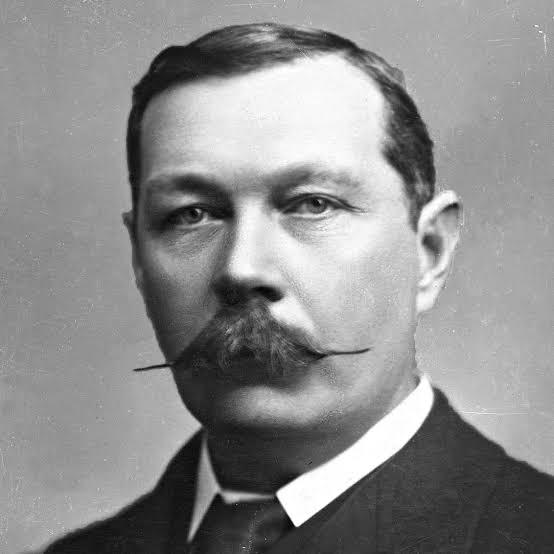
Just as a detective learns to trace a series of causes back to the scene of a crime, so a Bible student must learn to follow an author’s train of thought. Paraphrasing helps in this process—not by using formal logical language, but by simply reconstructing the links in the chain with plainly stated conjunctions, the same ones we use every day.
Specific Goals
- Understand the importance of logical flow in a paraphrase.
- Accurately reflect the logic of clear conjunctions in your paraphrase.
- Discern and clarify the specific meaning of ambiguous conjunctions.
- Explicitly state the logic of implied conjunctions.
- Avoid misrepresenting the argument as a result of eisegesis.