Lesson 5 | Test Your Arc/Bracket
Preparing a Hypothesis
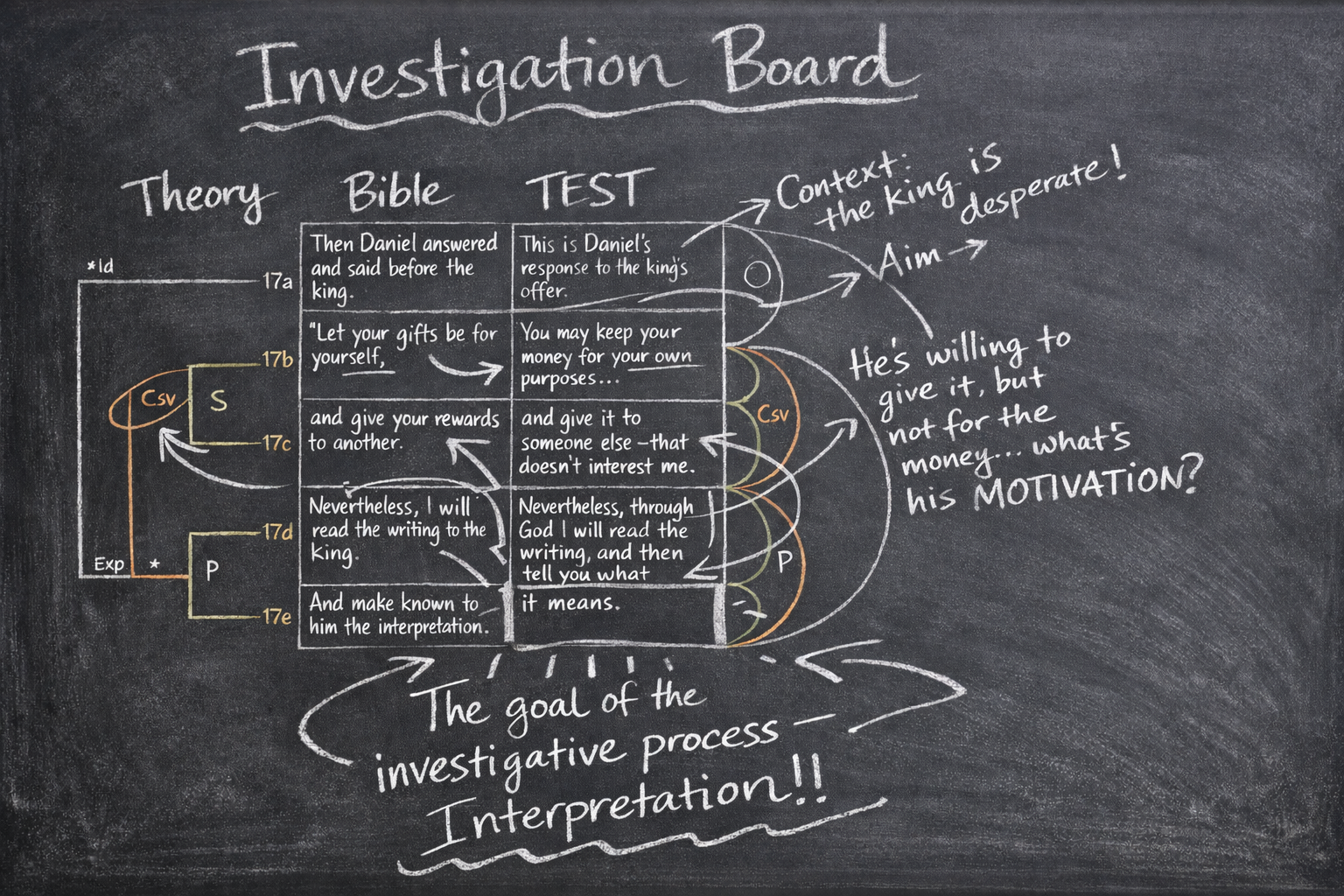
In Lesson 1, you learned that the goal in paraphrasing is to test your theory. That is, paraphrasing is the testing ground for fleshing out your understanding of a passage. Hopefully you have already seen this at work in the last four lessons.
But to what end are we testing our theories? Answer: Proper Interpretation.
That is, we paraphrase so that we can confidently proclaim, “This is what the passage means!” The paraphrasing process laid out in this lesson will teach you how to pass the three verification markers. Each of them is designed to help us deliberate between different possible interpretations until we can hone in on the core message that God is communicating.
“Formulate Your Hypothesis!”
This is precisely what we are doing when we create an arc or bracket—proposing what we believe to be the logical layout of a passage. But, of course, we are not always so sure about our initial conclusions. No problem! This is what the paraphrase is going to help us with.
To set yourself up well for the paraphrasing process, use of dot notes to record your hesitations, considerations, and questions as you build out your initial bracket.
Investigative Example: Isaiah 40:1–5
Carefully examine the above bracket and read the contents of the dot notes. We will develop this bracket in the steps that follow, building upon this first attempt and making changes as we go.