Lesson 5 | Test Your Arc/Bracket
Lesson Objectives
The enriching process of testing theories—of advancing from what you see, to what you first think, and finally to reality—is the reason this lesson was written.
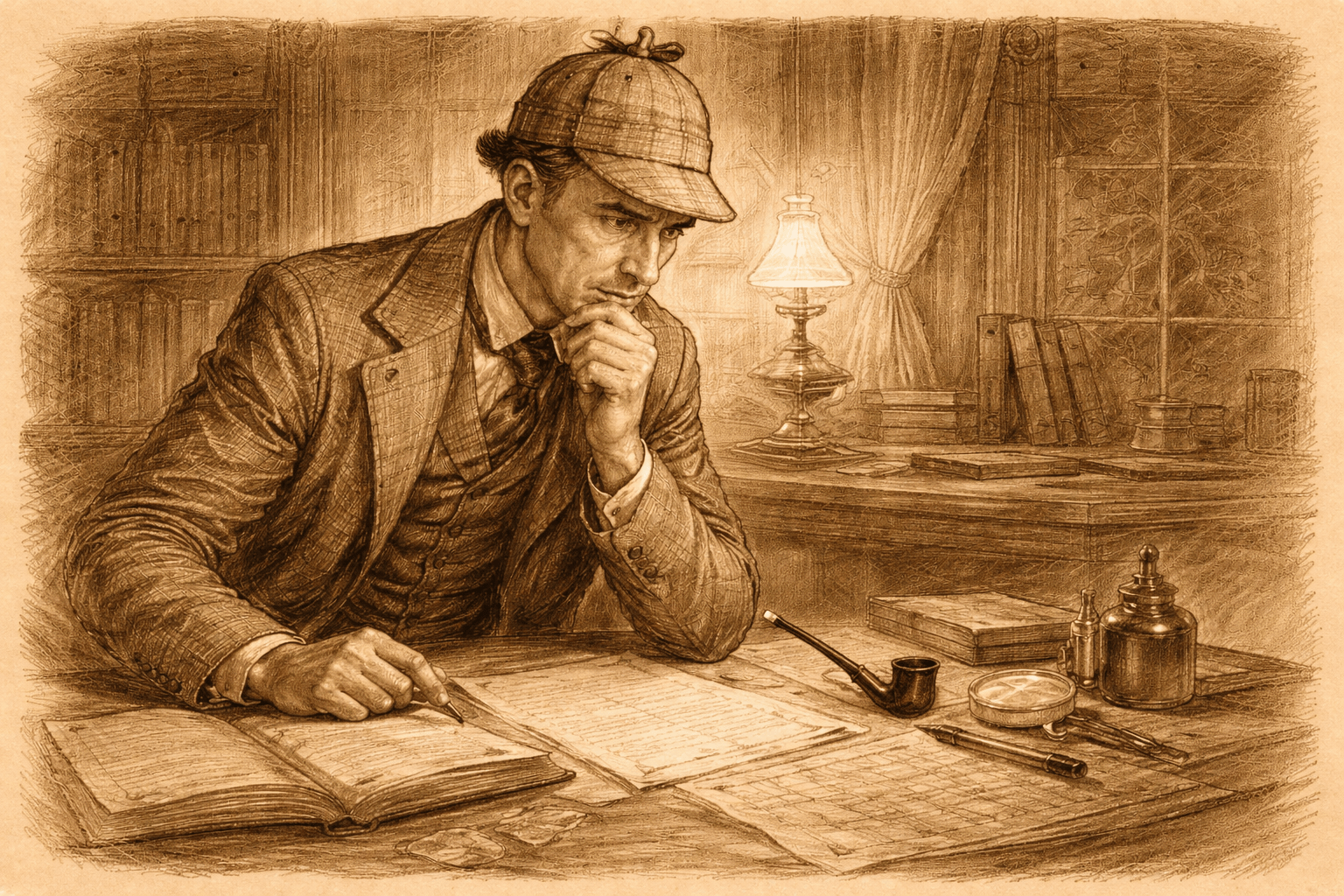
Testing Theories
In The Hound of the Baskervilles, Sir Henry Baskerville is arriving in London to finalize his inheritance of Baskerville Hall, on the moorlands of Devonshire, England. But when he arrives, he receives this strange message, made with letters from cut-up newspaper. It reads,
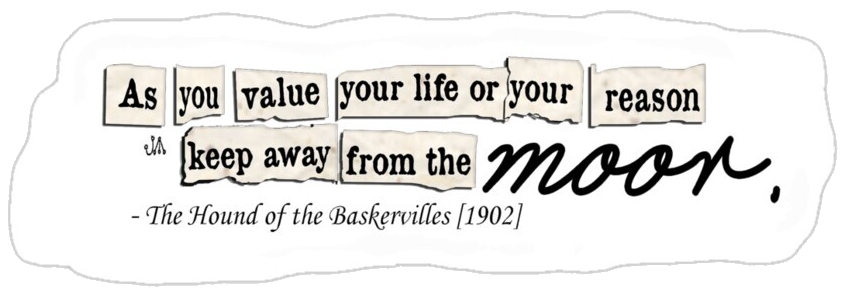
Perplexed, he and his friend Dr. Mortimer bring the problem to Holmes, who immediately infers that it has been cut from yesterday's issue of the Times. Holmes begins to draw inferences and posit various possibilities from the small note.
‘There are one or two indications, and yet the utmost pains have been taken to remove all clues. The address, you observe is printed in rough characters. But the Times is a paper which is seldom found in any hands but those of the highly educated. We may take it, therefore, that the letter was composed by an educated man who wished to pose as an uneducated one, and his effort to conceal his own writing suggests that that writing might be known, or come to be known, by you.’
‘Again, you will observe that the words are not gummed on in an accurate line, but that some are much higher than others. ‘Life,’ for example is quite out of its proper place. That may point to carelessness or it may point to agitation and hurry upon the part of the cutter. On the whole I incline to the latter view, since the matter was evidently important, and it is unlikely that the composer of such a letter would be careless. If he were in a hurry it opens up the interesting question why he should be in a hurry, since any letter posted up to early morning would reach Sir Henry before he would leave his hotel. Did the composer fear an interruption—and from whom?’
‘We are coming now rather into the region of guesswork,‘ said Dr. Mortimer.
‘Say, rather, into the region where we balance probabilities and choose the most likely. It is the scientific use of the imagination, but we have always some material basis on which to start our speculation.’
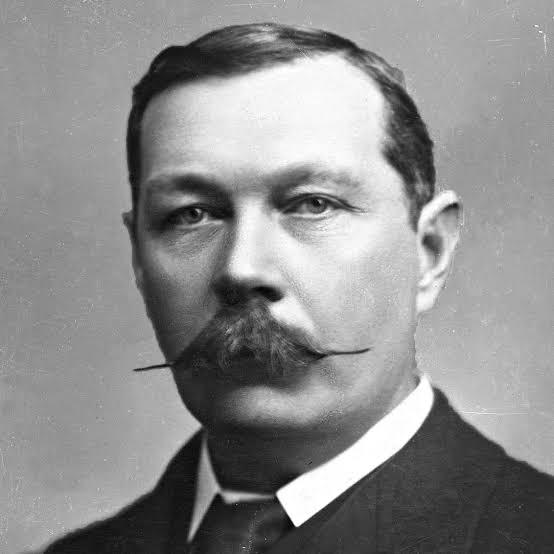
—Arthur Conan Doyle, The Hound of the Baskervilles, emphasis added.
Like a detective, the Bible paraphraser must not be content with half-formed theories and unsupported data. Rather, he must do the hard work—testing, retracing, and starting over as needed—until he arrives at a clear understanding of the passage. As Holmes put it, we must “enter the region where we balance probabilities and choose the most likely.“ This lesson will guide you through that testing process.
Specific Goals
- Learn to run your arc/bracket past three verification markers with your paraphrase.
- Gain the skill of aligning your bracket and paraphrase from left-to-right, top-to-bottom, and right-to-left.
- Avoid the trap of cherry-picking only the evidence that supports your theory.