Lesson 2 | Expansion
Seven Principles to Unpack the Text
If you are a person of many words, you will benefit from the structure and focus this step offers. If you are a person of few words, the “unpacking principles” in this step will help you form ideas and expand your paraphrasing. Either way, this step is for you.

1. Add Contextual Details
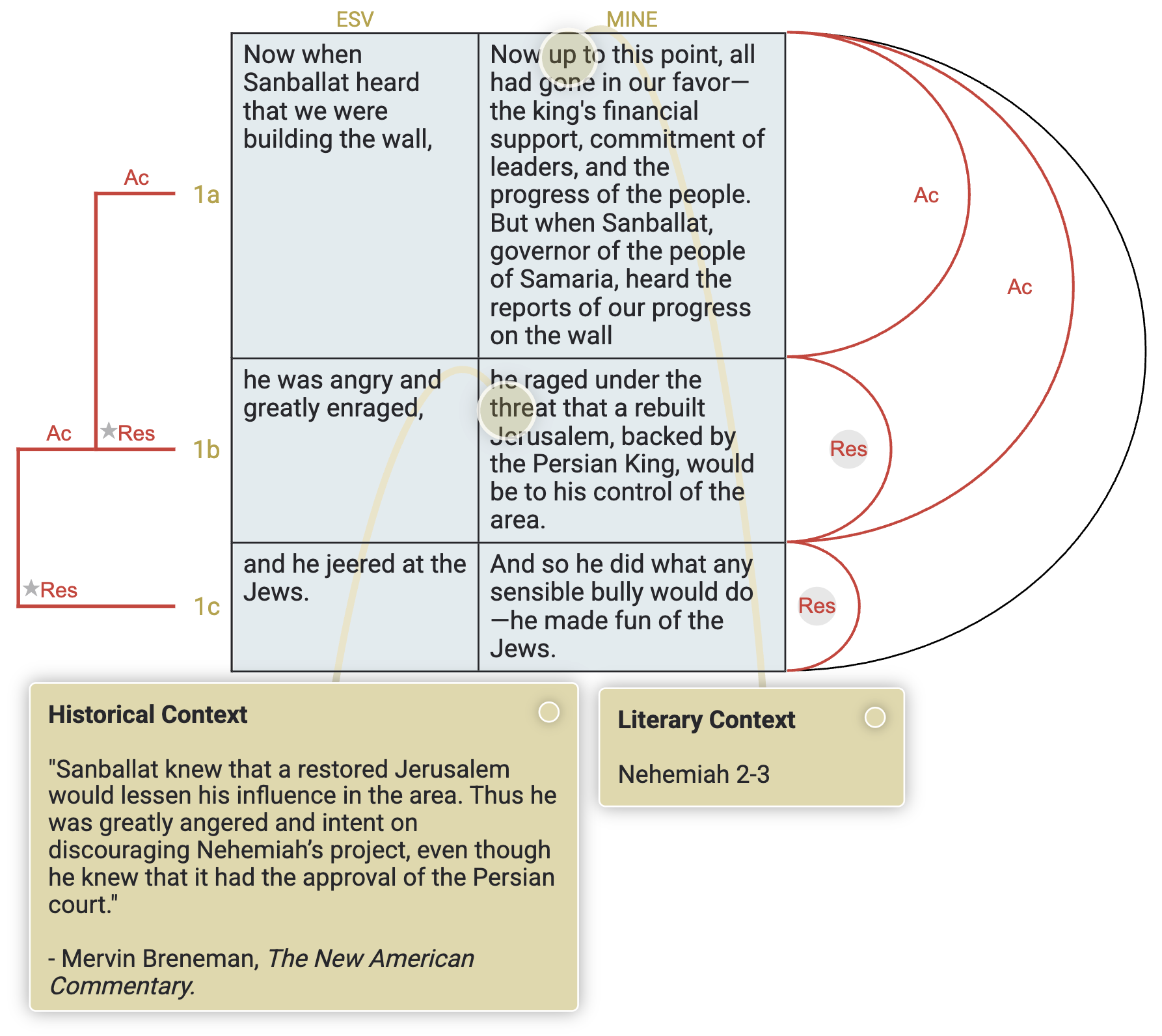
As we study a Bible passage, we should be looking for anything that sheds light on its context. There are two broad contextual categories: (1) Historical, and (2) Literary.
- Historical context involves anything that tells us about the author’s world—geography, customs, setting, historical background, and relationship with the recipient, among other factors. You can learn more about how to research the historical context in Biblearc’s Treasury Course.
- Literary context tells us how a passage relates to the words around it. But it is not enough just to consider the immediate context. We must also examine the concentric circles of context—section, chapter, book, and redemptive-historical setting. Learn more about this approach in Biblearc’s Discovery! Course.
Let’s consider how paraphrasing the historical and literary context unpacks the cause of Sanballat’s rage in Nehemiah 4:1.¹
2. Consider All Angles
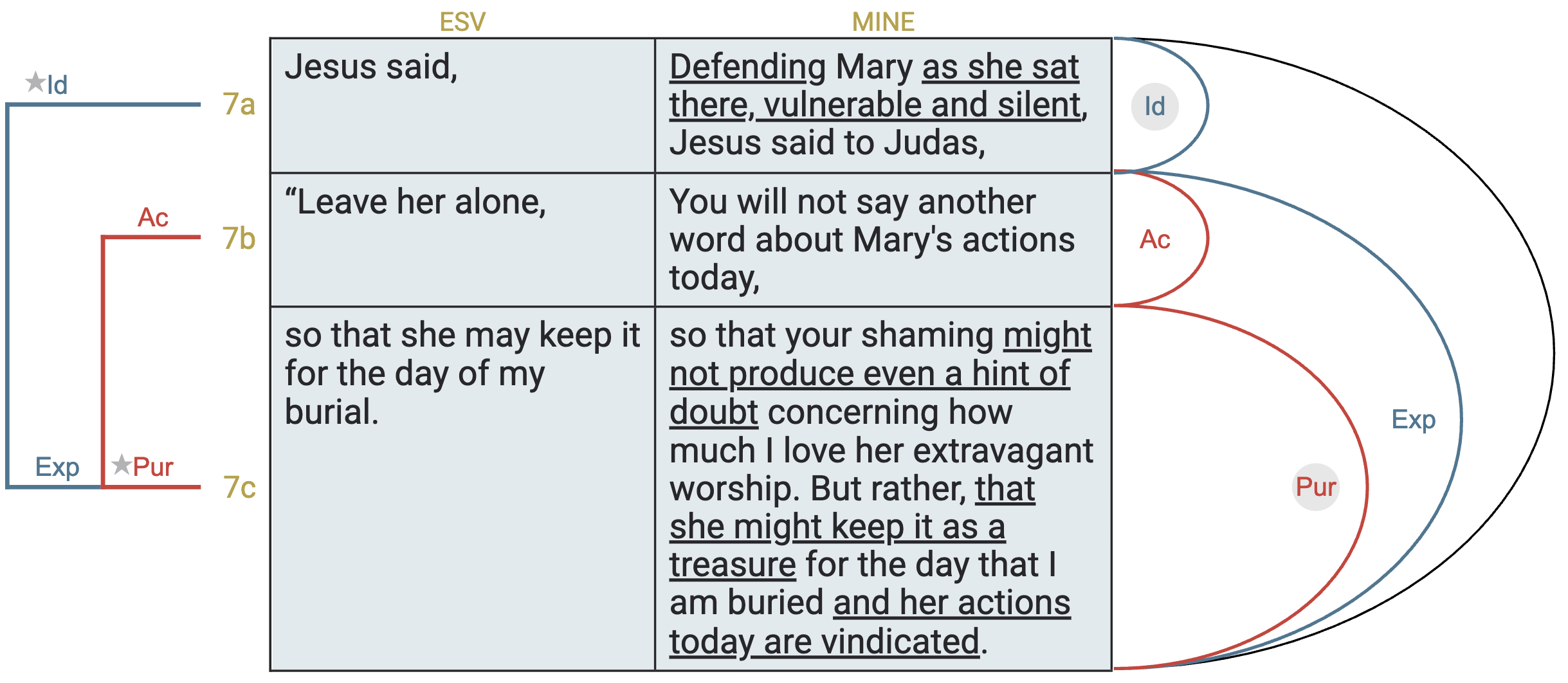
A text is often understood in a new light when viewed from different perspectives in view of the genre. When you paraphrase an epistle, consider the angle (i.e. perspective) of the audience; when you paraphrase a narrative, replay the scene through the eyes of each character; and when you paraphrase a poetic passage, consider the various audiences the author addresses.
Finally, always consider God’s angle. Even when the text does not mention him directly, he invites us to see all things through his heavenly perspective.
In the paraphrase of John 12:7 below, Mary of Bethany is a central character in the story—though she never speaks, and only acts in verse 3. Her presence and perspective weigh heavily on Jesus’ mind as he defends her against Judas’ shaming accusations. Notice how the paraphrase, while spoken from Jesus' first-person perspective, still conveys Mary's angle.
3. Rearrange Ideas
In a paraphrase, not everything has to follow the original order. Rearranging ideas is a great way to draw out emphasis latent in the text.
When studying 2 Corinthians 5:21, I noticed that the Greek text emphasized the phrase “The one who knew no sin…” by placing it first. (You can easily see this on Biblearc by clicking the verse number to access original language tools.) So I decided to make it explicit in my paraphrase.
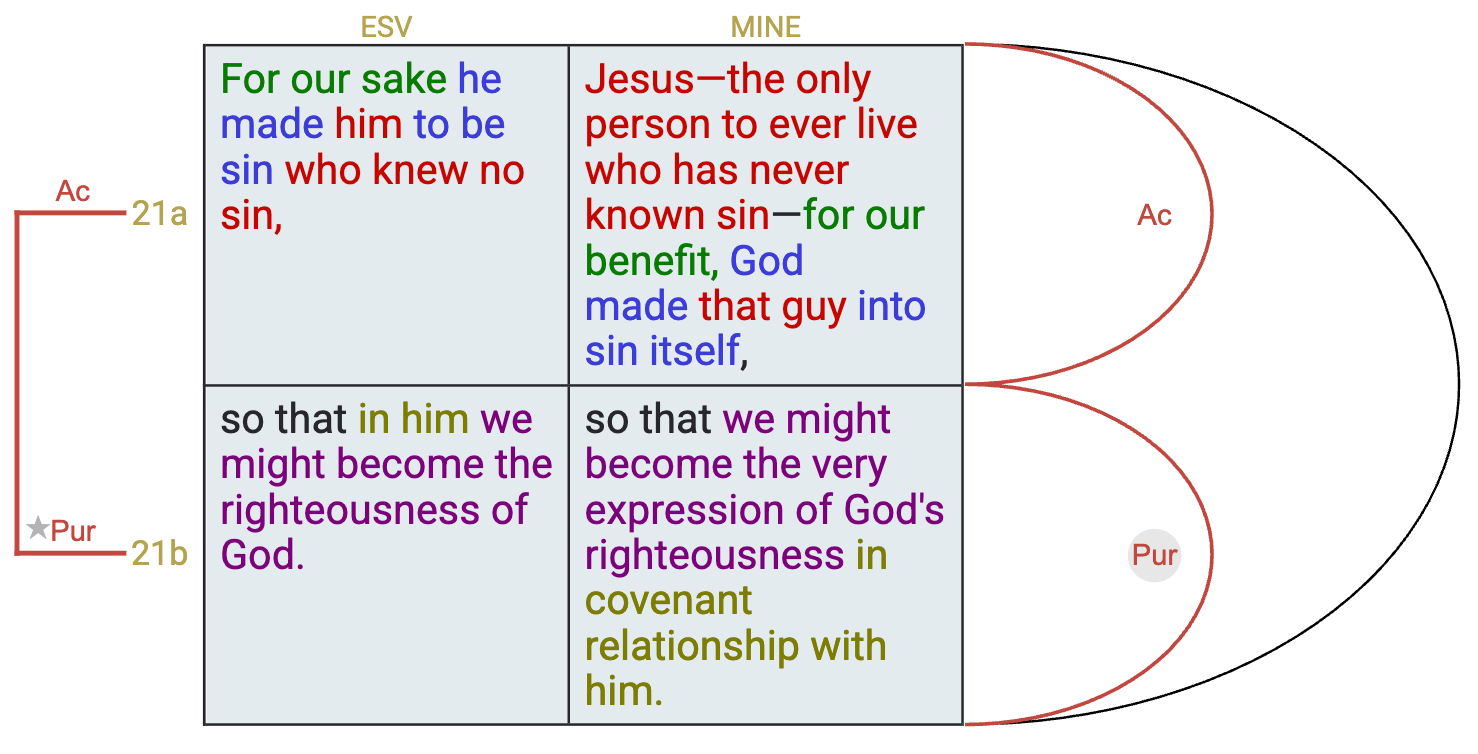
Note: Original language considerations are not the only reasons to rearrange ideas; any aspect of the text that calls for interpretive emphasis can justify reordering.
4. Highlight Emotion
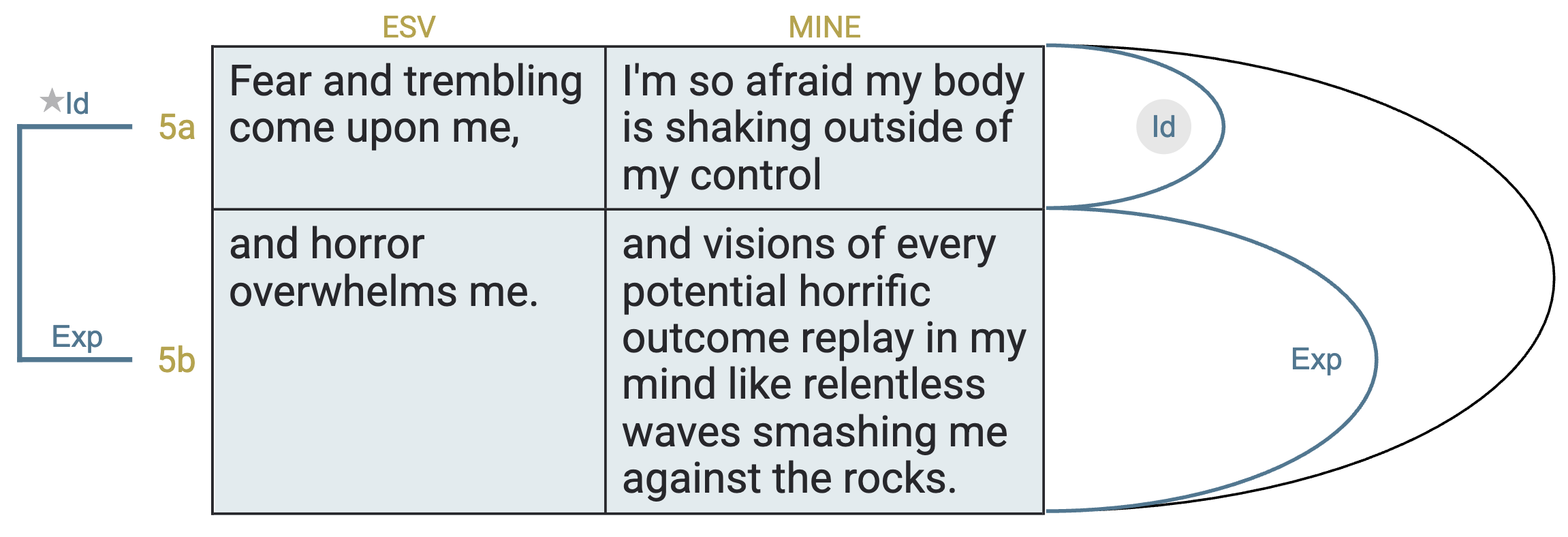
The authors of the Bible expressed emotion in a myriad of ways. Emotive words, parallelism, and symbolic actions fill the pages with emotional and psychological depth. As you study the Bible’s ancient expressions of emotion, you may find yourself naturally engaging in sympathetic reconstruction without even being aware of it. That is, we begin to feel what the characters feel, often without realizing it.
The paraphrase is the perfect place to highlight the deep emotion within a passage. Indeed, many who practice paraphrasing do so precisely to help the reader feel the passage more vividly.
That said, it is important to understand in this step that we are not trying to fill in gaps with emotional language. Rather, we are unpacking the emotional expressions that are evident in the text.
Consider this paraphrase of Psalm 55:5.
5. Demonstrate Internal Reasoning
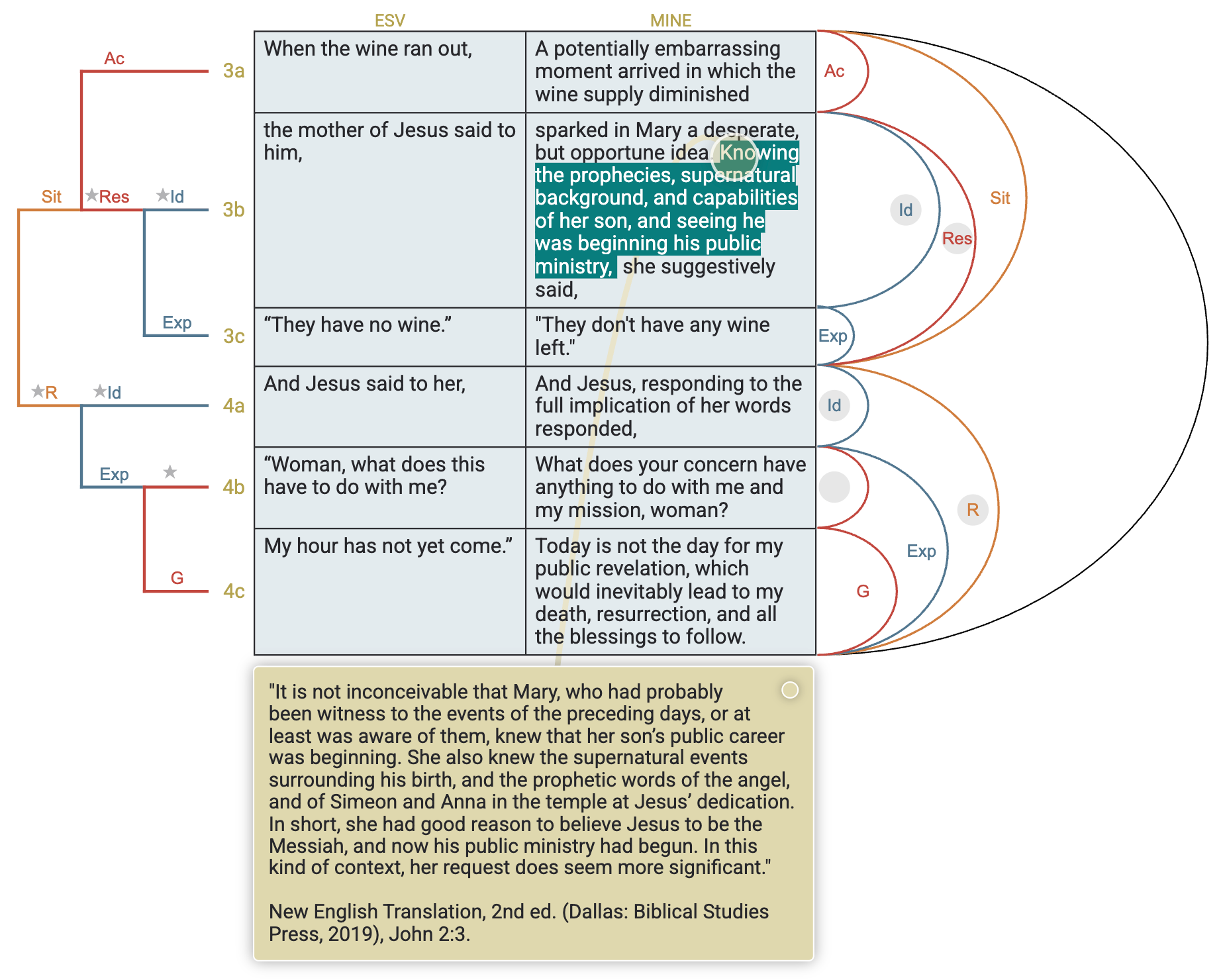
Often a Bible character's behavior indicates an inner thought process behind it. In paraphrasing, the Bible student has the opportunity to unpack these inferred thoughts. When the context clearly suggests an unspoken mindset, it’s appropriate to reflect that in your paraphrase.
This is clearly the case for Mary in John 2:3, where Jesus’ terse—but not disrespectful—response shows that there is more in Mary’s suggestive request than meets the eye.
6. Make Good Use of Imagery
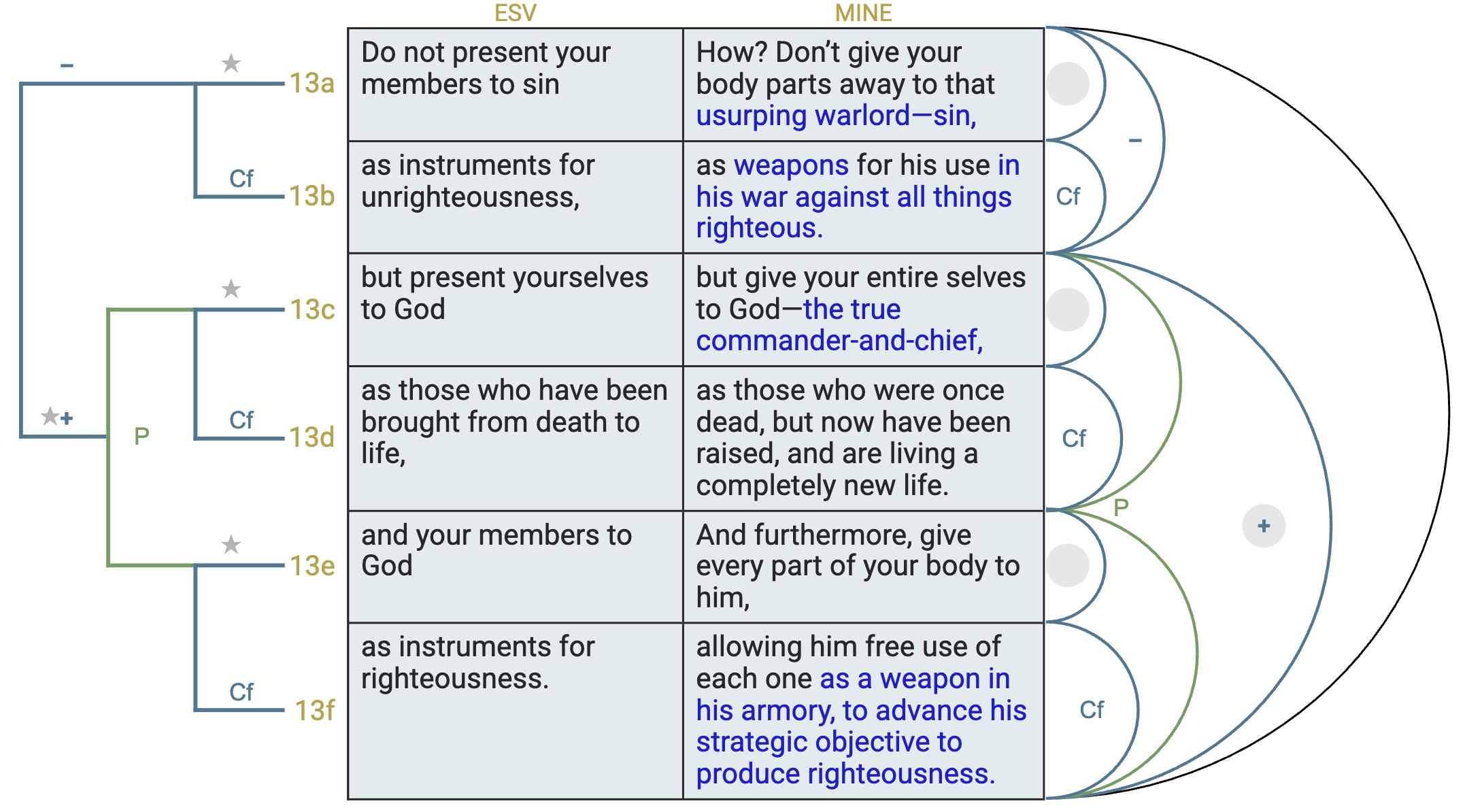
When a Bible passage employs specific imagery to explain a point, you have license to unleash the full power of the image in your paraphrase.
When Paul uses the word “instrument” in Romans 6:13, he has a very specific idea in mind. This same word appears many times throughout the LXX, often referring to a weapon or a tool. This imagery places us in the scene of a war, a scene which is effectively conveyed in the paraphrase below.
Note: The broader concept of paraphrasing allusions, metaphors, figures of speech, and Old Testament references in the New Testament will be covered in Lesson 7.
7. Use Definitions of Keywords and Concepts
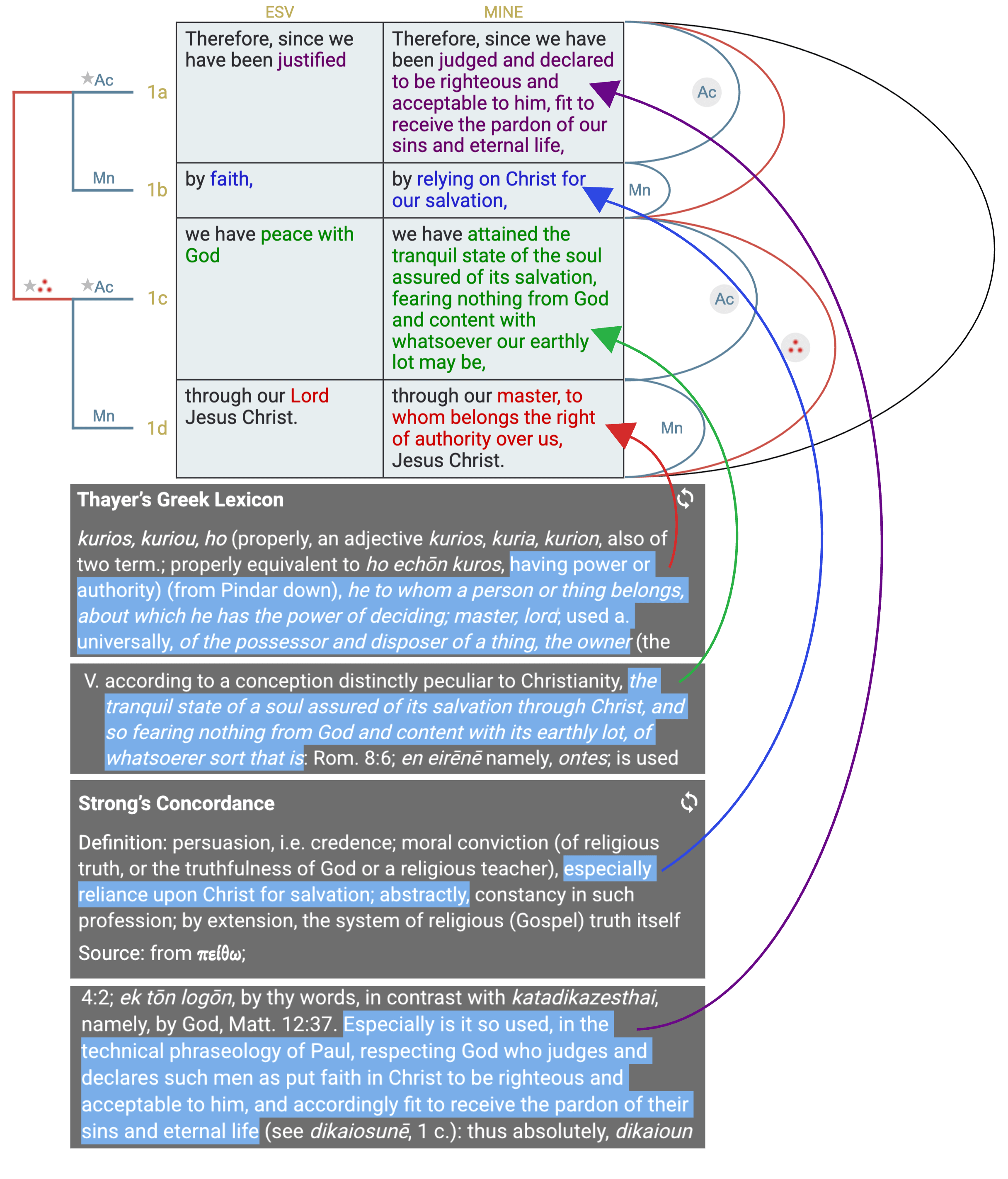
Finally, some of the most effective paraphrasing may come from having a lexicon or dictionary open next to one’s Bible. Utilizing the definitional language is a fruitful way to unpack your understanding of a passage.
This paraphrase of Romans 5:1 includes several terms that are helpfully expanded by Biblearc’s lexicons and concordances.