Lesson 8 | Sub-Point Summaries
The Grey Dot
In order to learn the nuts and bolts of summarizing, we need to understand something you may have overlooked in the arcing/bracketing module—that little grey dot.
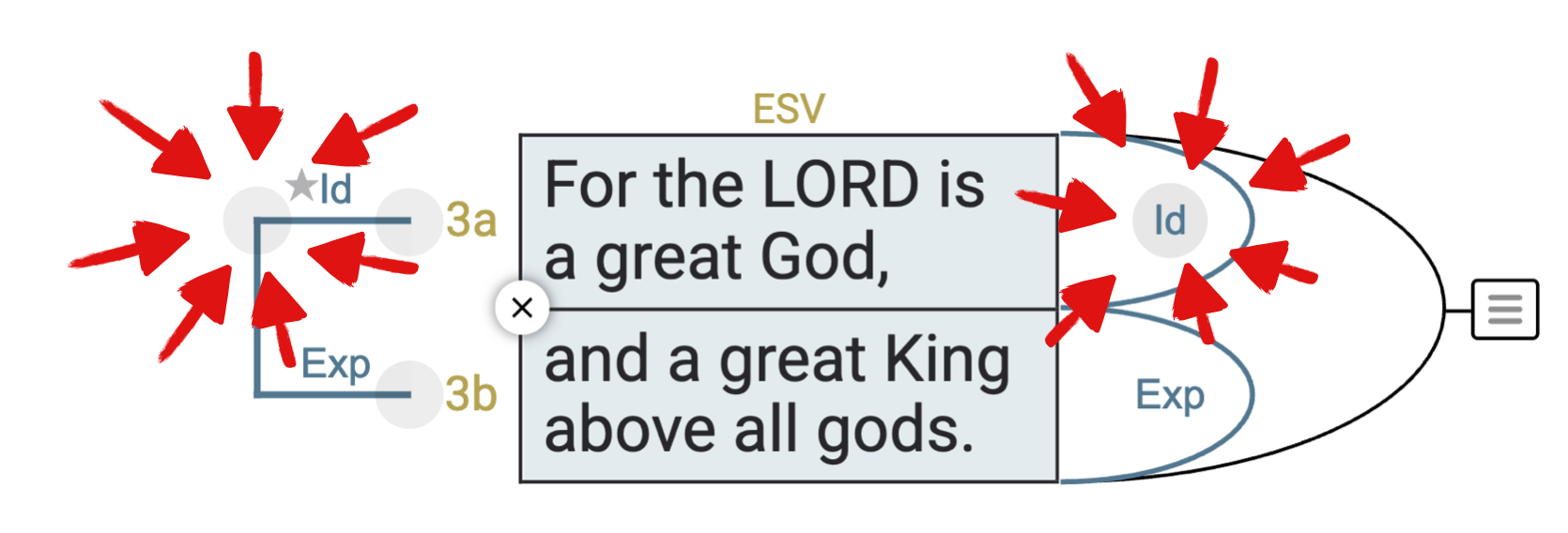
What Does it Mean?
Simply put, the grey dot indicates the primary point between two propositions. That is important to know for summarizing because you need capture the primary point in the summary. That’s why, in every relationship label, we’ve indicated which proposition normally carries the primary point by marking it with a grey dot. (You'll notice that on the bracket side there is also a star indicating the primary point—more on this below.)
That there is a primary point between every set of propositions is not something unique to English. It is universal to all languages. It is also not something unique to Biblearc modules, but can be substantiated by all forms of literature. Finally, this principle is not something new to you. As a communicator, it is the way you have been using language all your life! The identification of the primary point between two propositions is universal to the way humans utilize language.
Consider the following example:
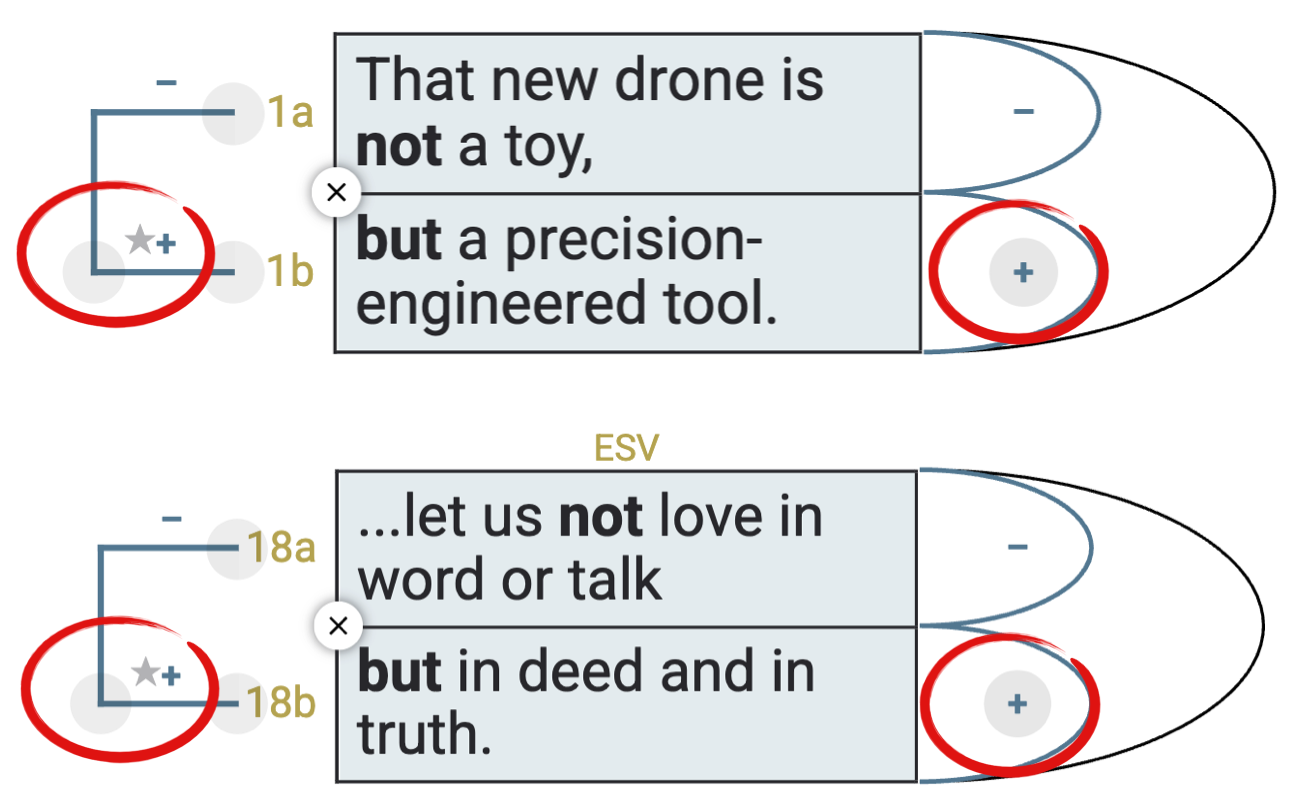
“That new drone is not a toy, but a precision-engineered tool.”
In the above sentence, what is the primary point? Is it simply to say that the drone is not a toy? Obviously not. Whoever said this is communicating primarily that the drone is a “precision-engineered tool.” The negative statement is only clearing the way for the positive—it is playing a supportive role. That's the way humans usually use the negative-positive relationship.

Let’s consider a trickier example in the form of the Concessive relationship. Many often have trouble with Concessives at first because it can be tough to figure out which proposition supports the other.
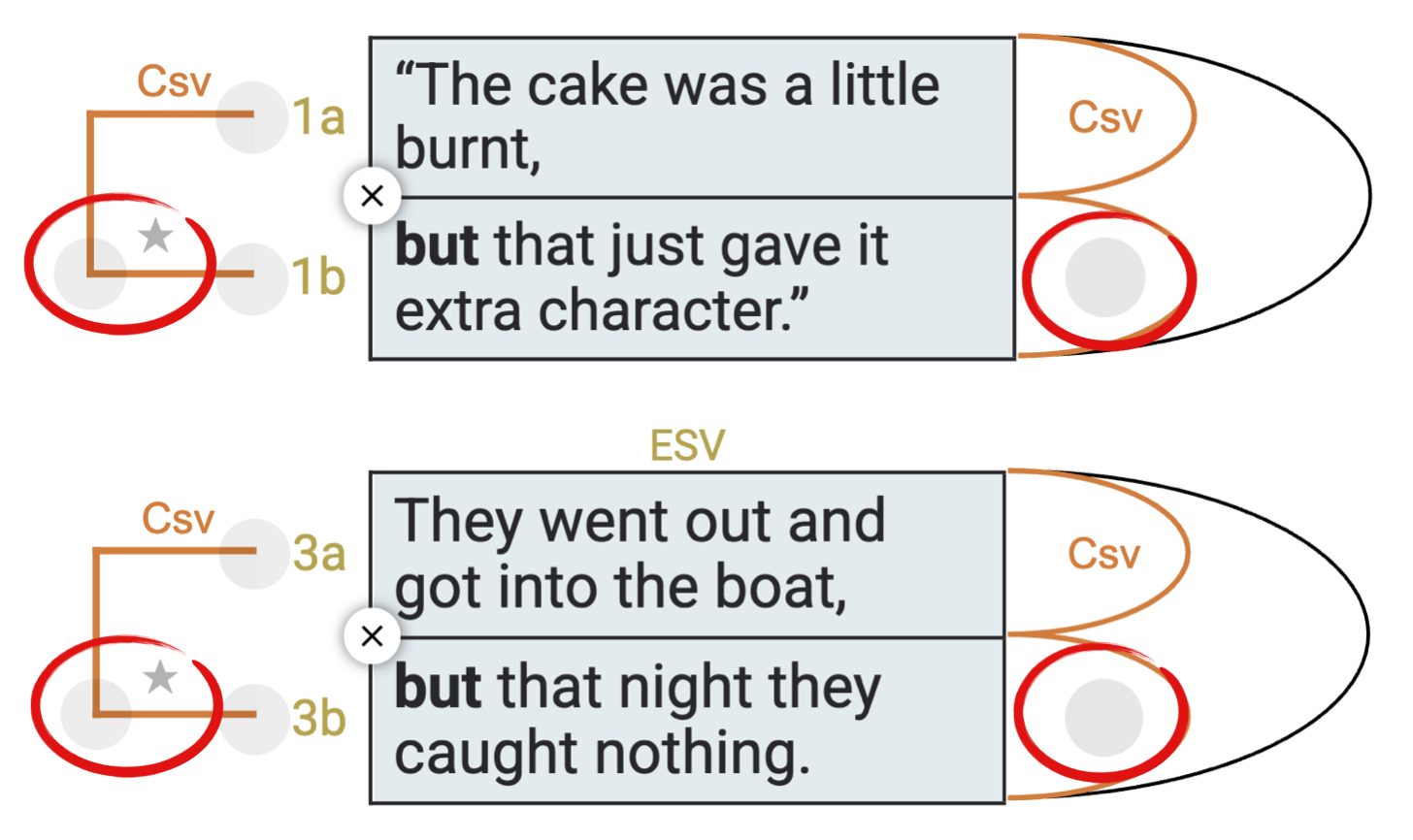
“The cake was a little burnt, but that just gave it extra character.”
In the above sentence, the primary point is not to communicate that “the cake was a little burnt.” Rather, that the cake is still good—a cake with “extra character.” These two propositions relate with the Concessive relationship—the first supports the second by way of stating a potential objection. When arcing/bracketing this sentence, the grey dot would go on the second proposition.
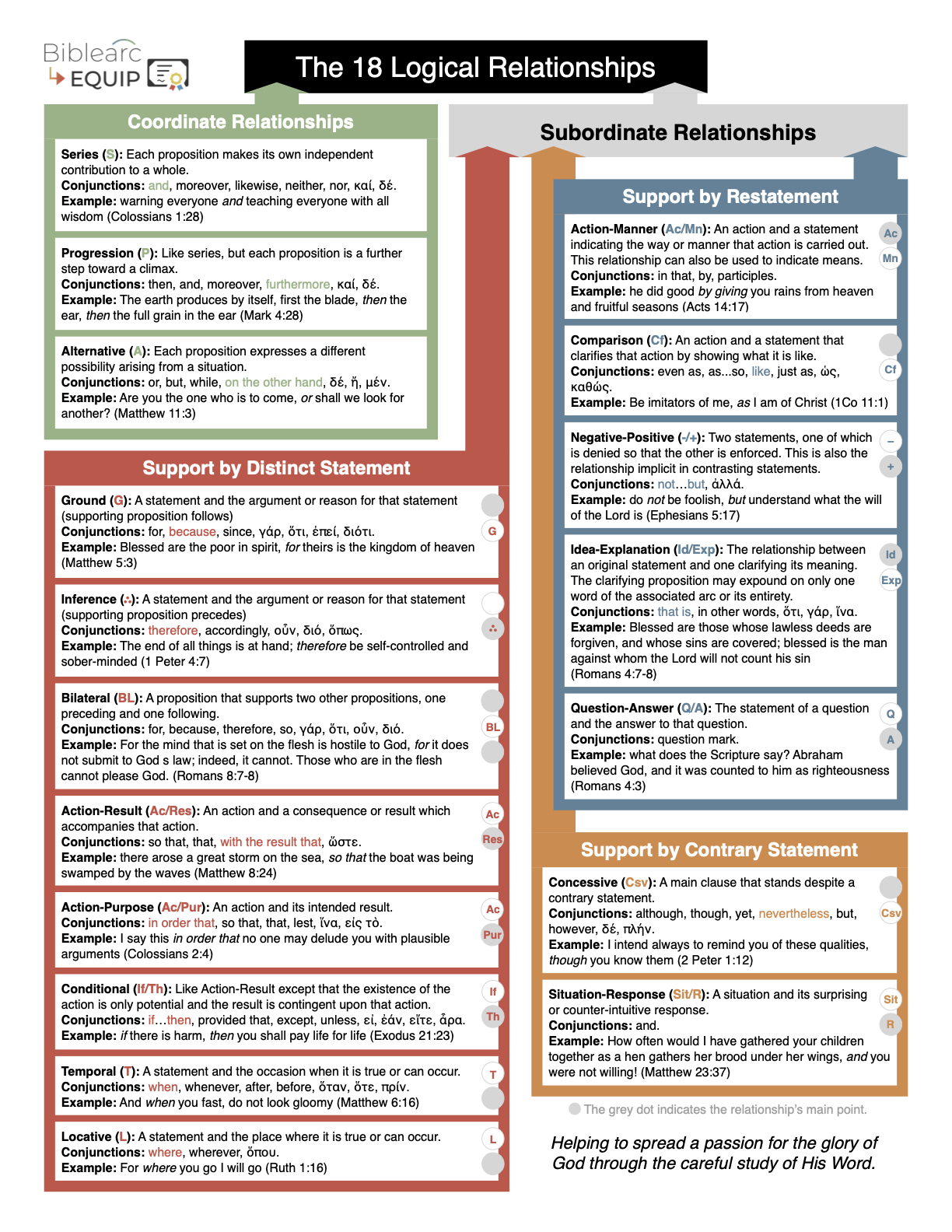 The 18 Logical Relationships Cheat Sheetpdf
Notice how the primary proposition of each relationship is indicated with a grey dot.
Note: Biblearc's Arcing Course contains more information about identifying primary and supporting propositions.
How Does the Grey Dot Work?
There are a few important technical issues that must be brought up at this juncture.
1. Coordinate Relationships
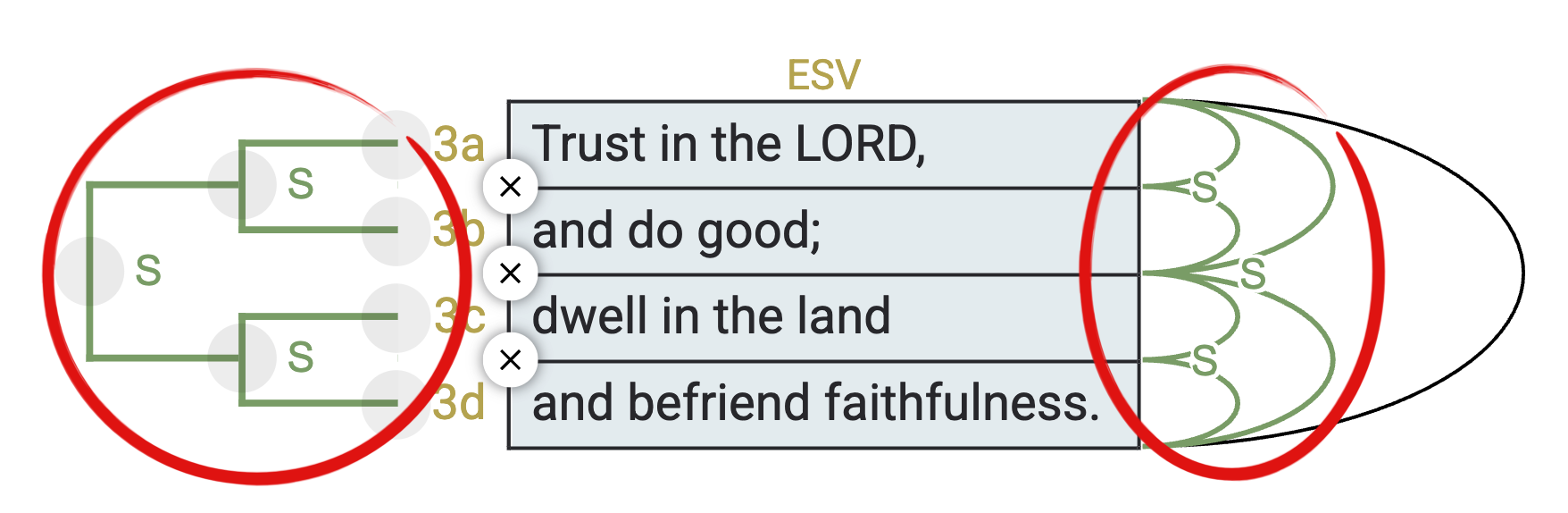
By nature of their logic, coordinate relationships do not carry a primary point or supporting point. All propositions in a coordinate relationship are independent primary points. Therefore, on the arcing side, coordinate relationships don't have grey dots, only labels that sit between the propositions. On the bracketing side, the grey dots always connect to the center of the bracket, as in Ps 37:3.
2. Single Label Relationships
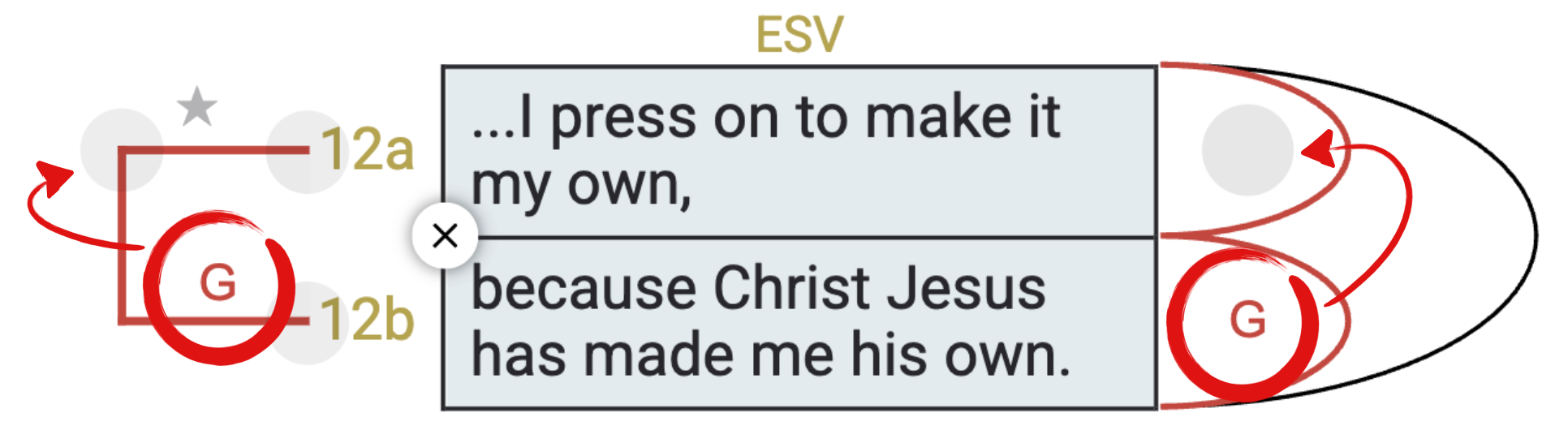
Six relationships only have a single label—Comparison, Ground, Inference, Temporal, Locative, and Concessive. Of these, all but one place the label on the supporting point side. This means that the grey dot will be alone—without a label. The primary point is the one with the grey dot, not with the label, as in Phi 3:12.
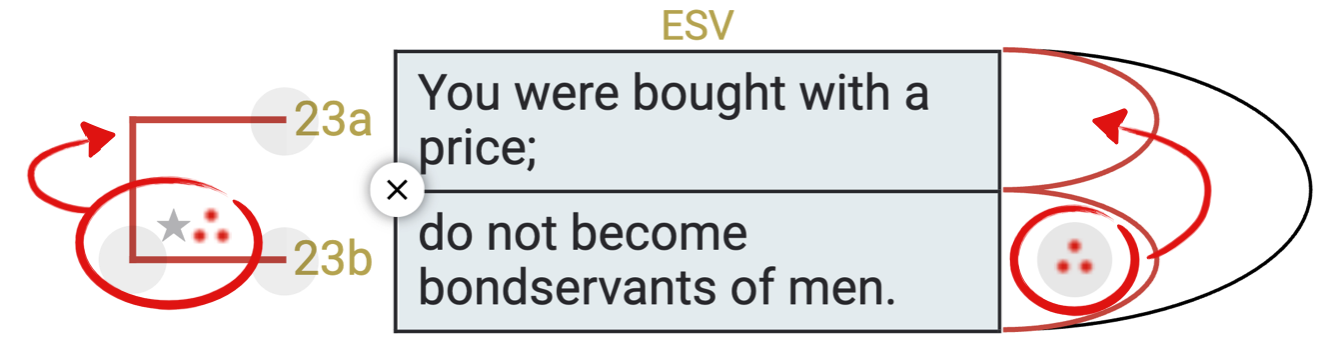
The one exception is the inference relationship, which pairs the “therefore” sign together with the grey dot and leaves the supporting proposition empty, as in 1Co 7:23.
3. The Star (bracketing only)
You will notice that in all the examples on this page, the bracketing side has a star and a grey dot associated with every primary point. This is because all the images of arcs/brackets on this page so far have been taken in editing mode. When you click out of editing mode, the grey dot disappears on the bracket, but the star will always be present to show you which propositions is the primary point.
4. Building Beyond Two Propositions
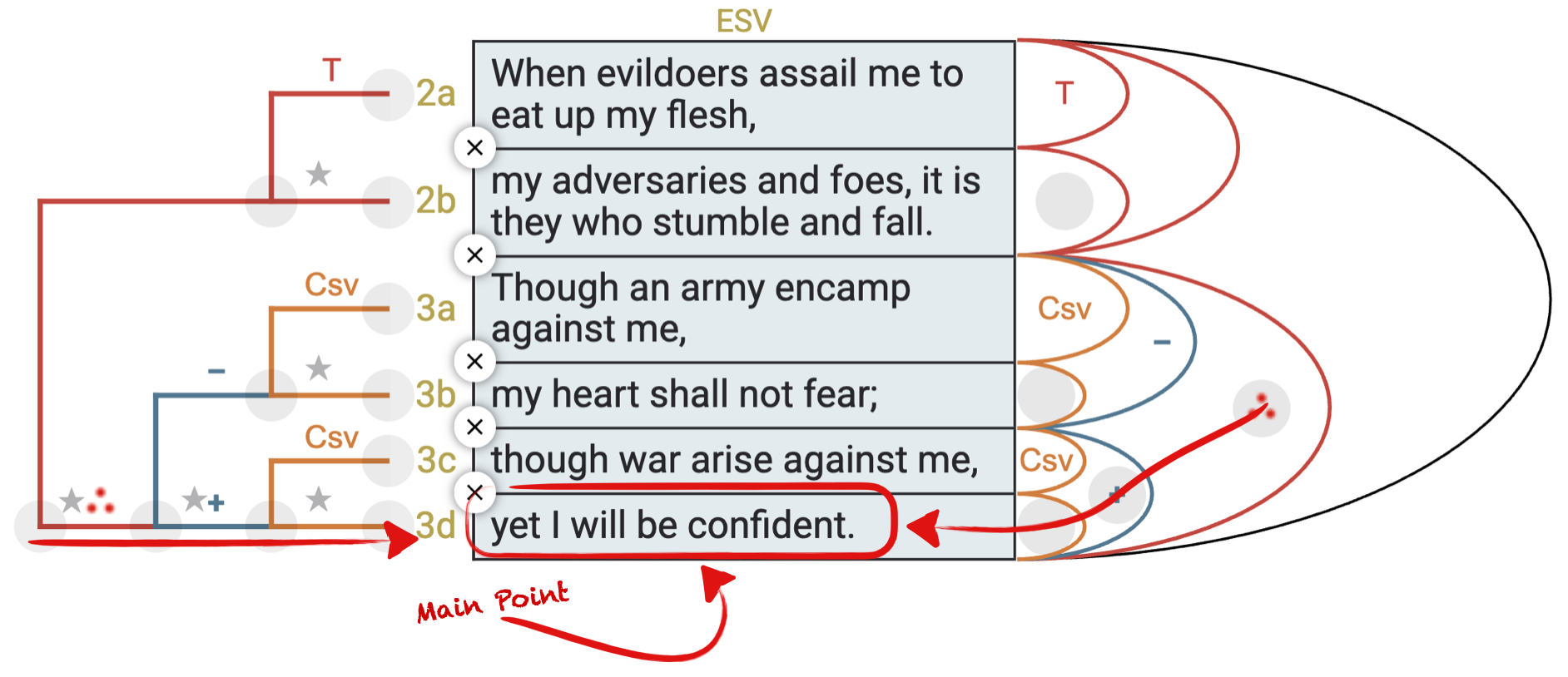
When you are building an arc/bracket, you need to follow the grey dot from the outside inward to discover the main point of the entire passage. This is easy to do in the bracket, when the setting “Straight line to main point” is toggled, because it only means finding the longest horizontal line and following it into the primary proposition. On the arcing side, you’ll have to follow the somewhat erratic pattern of the grey dots inward until you get to the main point. Consider this example from Ps 27:2–3.
When Do I Move the Grey Dot?
We get to move the grey dot?! That doesn’t seem right! Aren’t all language laws fixed and immovable? Answer: By no means!
Authors almost always put logical emphasis on propositions in the predictable pattern described on this page. But sometimes they intentionally break the norms, and it is beautiful. In such cases, the primary proposition will not match the default for that relationship and we will have to manually move the grey dot. This is easy to do on Biblearc—simply click the other relationship label in the relationship menu bar.
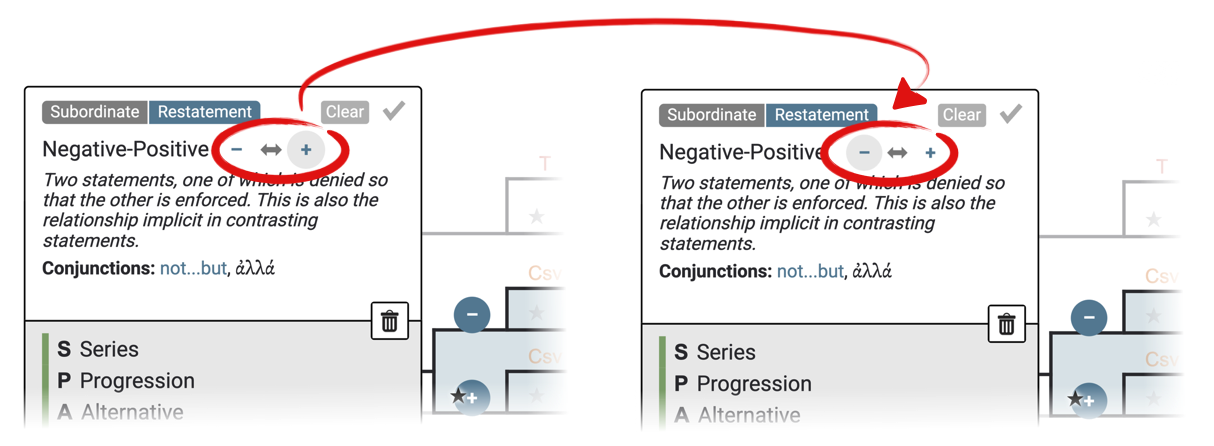
But what principles ought to govern our decision to move the grey dot?
Summarizing Principle:
Move the grey dot indicating the primary proposition when the second level logic demands this.
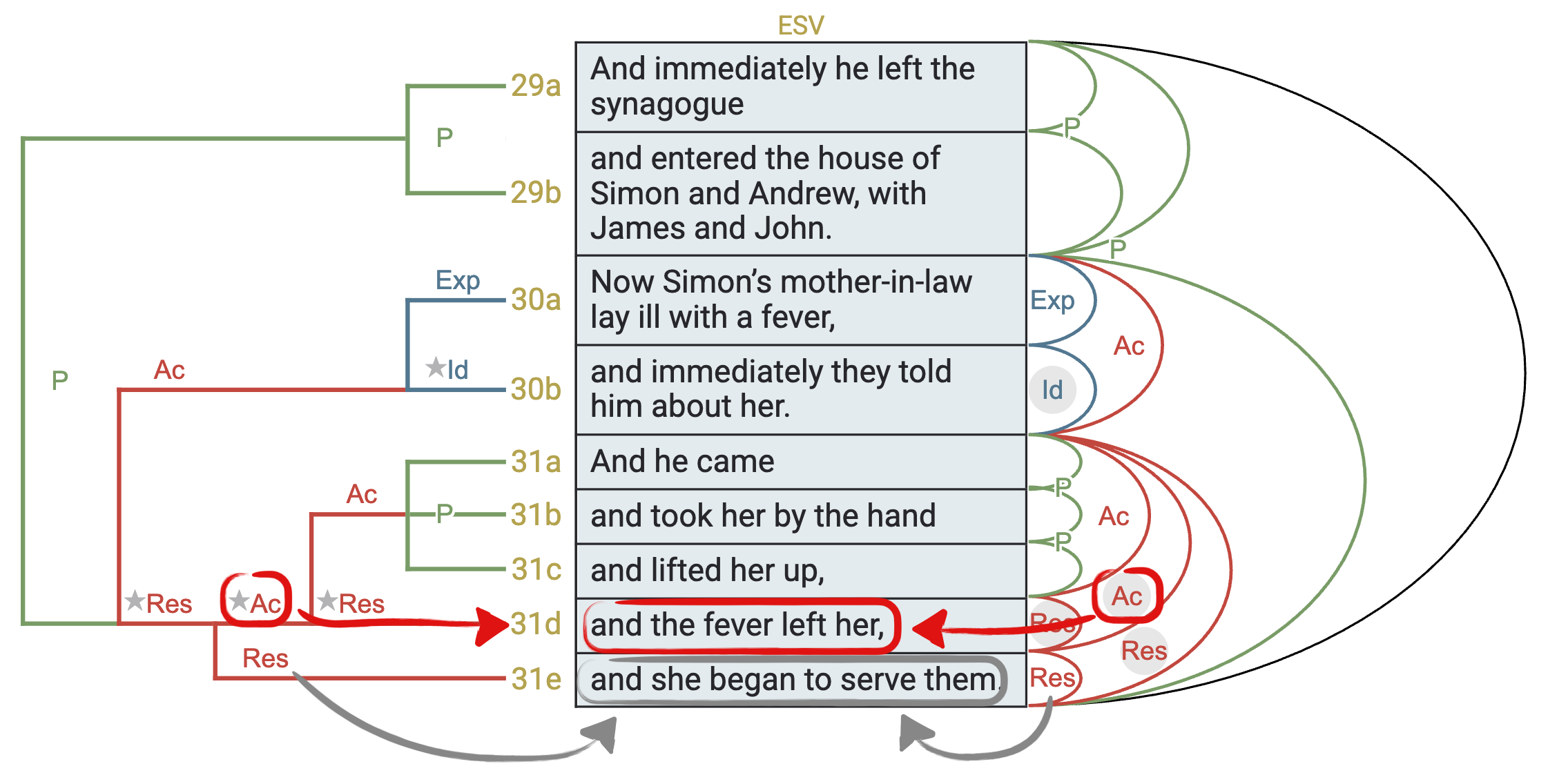
In Mark 1:29–31, we find a perfect example of an instance in which the grey dot should be moved from its default position. In the Action-Result relationship, the “Result” is normally the primary proposition. But Peter’s mother-in-law’s service is not the main point of the story—her healing is! Her service is only an additional detail that verifies the healing. Thus, the emphasis must be shifted from 31e to 31d. Notice the star and straight line on the bracket side, as well as the grey dot on the arc side, now indicate that 31d is the primary point between these two propositions.