Lesson 3 | Paraphrasing the Logic
Implied Connections
But, of course, sometimes there isn’t even an “and” present! Sometimes, a biblical author connects ideas without any linking words. This doesn’t mean the pieces are unrelated—only that the links are implied rather than stated. This dynamic occurs more often than you might expect.
For example, it is very common to leave off one side of a two-word connection. In such cases, one half implies the other:
If you practice these qualities [then] you will never fall. —2 Peter 1:10b ESV
Like clouds and wind without rain [so also] is a man who boasts of a gift he does not give. —Proverbs 25:14 ESV
Or consider the exhortation:
Beloved, do not imitate evil but imitate good. Whoever does good is from God; whoever does evil has not seen God. —3 John 1:11 ESV
The initial exhortation has two elements placed in contrast: “do not imitate evil but imitate good.” But the three statements separated by the punctuation have no connectors at all. Nevertheless, the implied connections are able to be discerned:
Beloved, do not imitate evil but imitate good. [Because] [on the one hand] whoever does good is from God; [while on the other hand] whoever does evil has not seen God.
An Example
Habakkuk 2:2–3 has six propositions with connections that are entirely implied. That is, they are not introduced with a conjunction. Take a moment and consider what conjunctions you would use if you were writing a paraphrase of this passage.
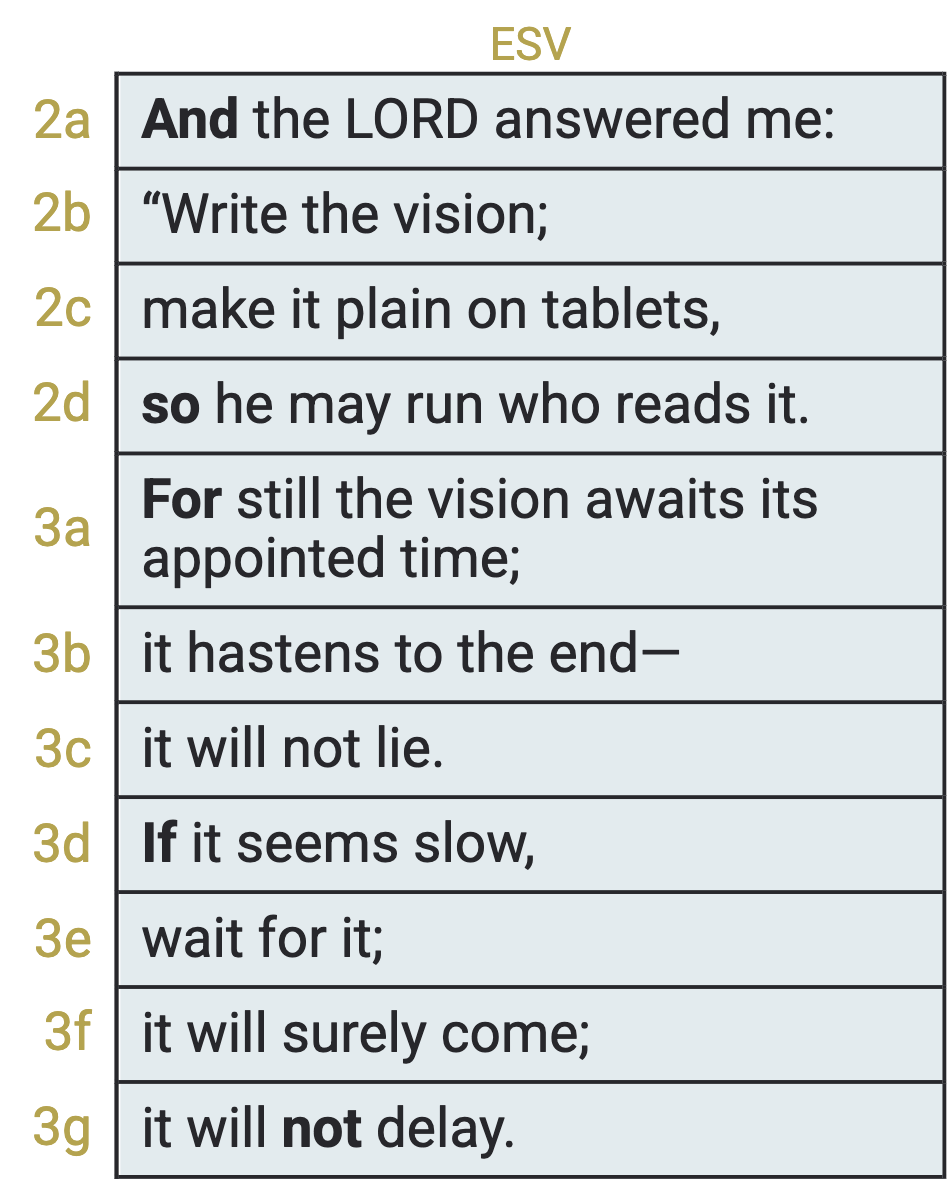
Now take a look at the paraphrase below in which the implied conjunctions are paraphrased in red. Were you able to follow the implied logic?
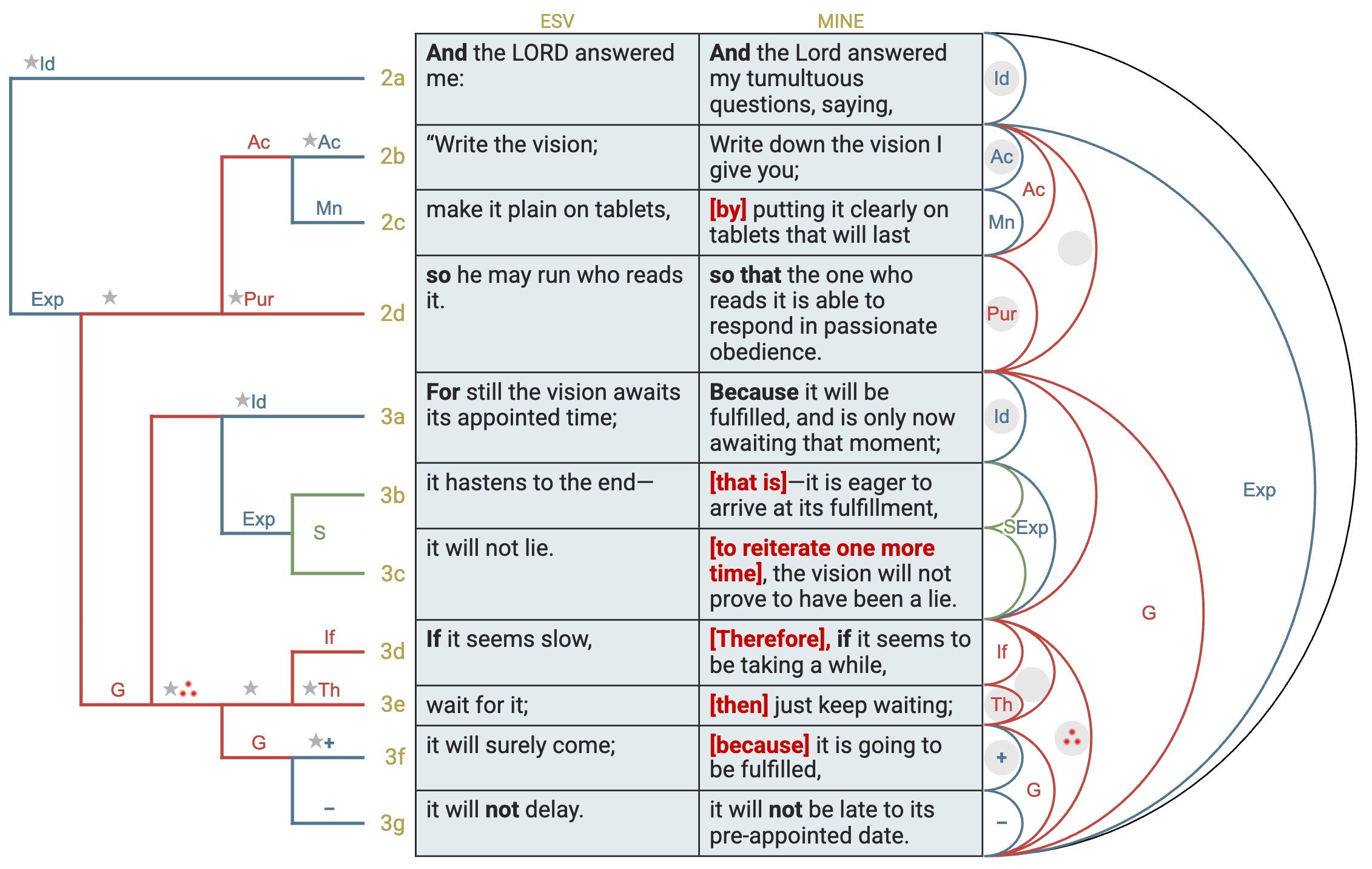
Let's walk through each implied conjunction slowly:
- 2c is describing the manner in which 2b should be accomplished.
- 3b is explaining the eagerness by which 3a will be accomplished.
- 3c is explaining the definiteness of 3a's fulfillment.
- 3e draws a conclusive action from the truth of 3a.
- 3e completes the conditional statement, which began in 3d.
- 3f provides a further reason for the exhortation to wait in 3e.
Though conjunctions are not stated in any of the above cases, the logic is still present and able to be discerned.
An Expanded Paraphrase of Paul’s Letters
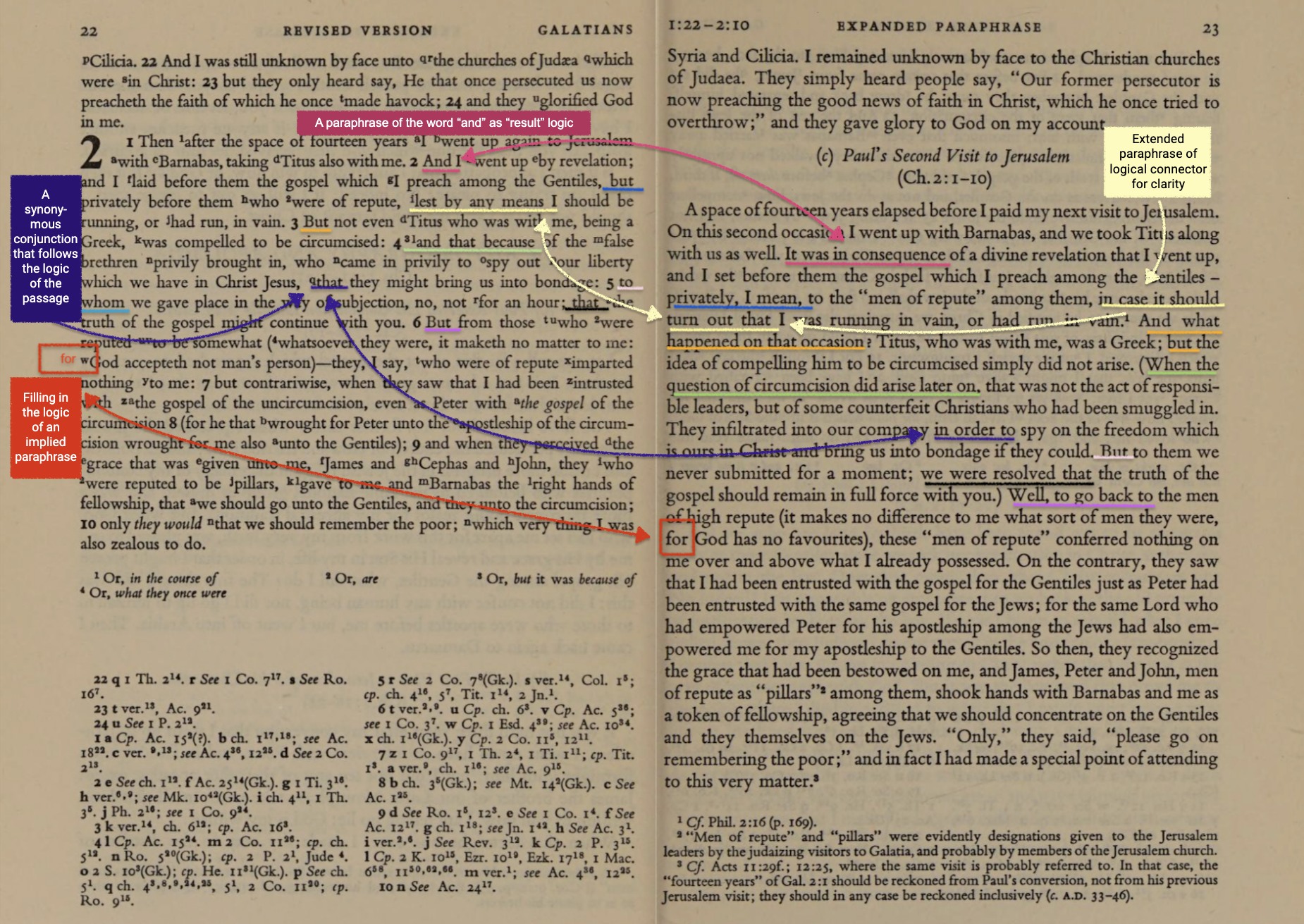
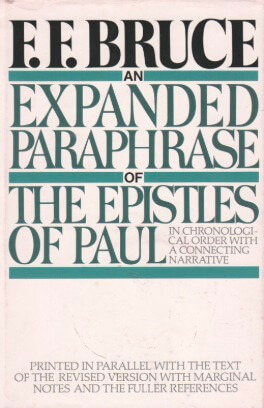
Let’s pull together everything we’ve learned in the last three steps into a single paraphrase. Below is an example from the second chapter of Galatians, where F. F. Bruce applies the very principles we've been studying. The Revised Translation appears on the left, and Bruce’s paraphrase on the right.