Lesson 3 | Paraphrasing the Logic
Stumped: Confirmation Bias
Have you ever experienced the unnerving feeling of coming to a conclusion about a passage that doesn't quite fit—but you don't want to let your idea go? Why does that happen? At least one reason is confirmation bias. That is, we are biased toward a prior understanding of the passage and will not let new evidence lead us in a different direction. Ultimately this leads us to force a logical connection that doesn’t exist rather than allowing the evidence to lead our mind and heart to new conclusions.
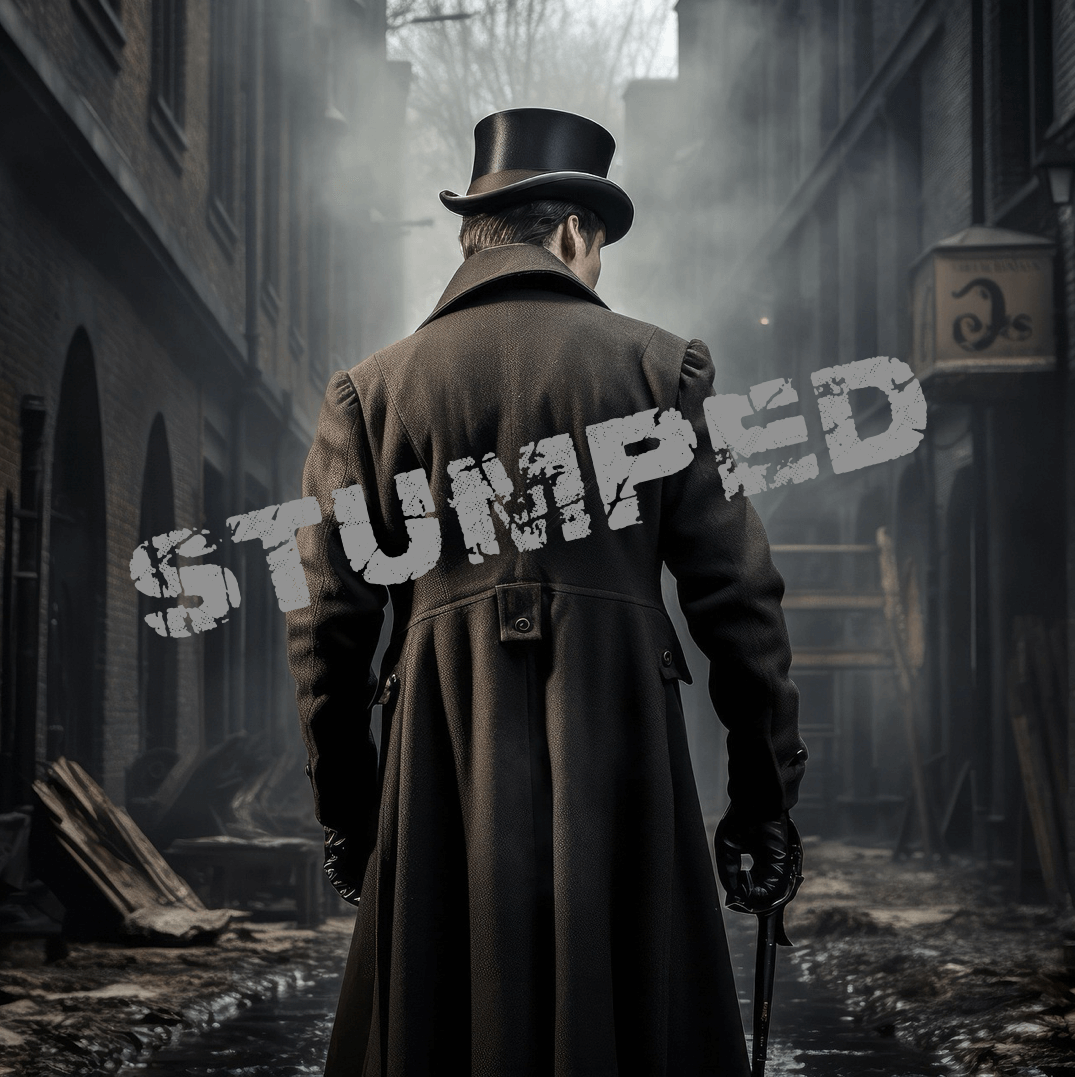
Confirmation Bias:
The tendency to interpret new evidence as confirmation of one's existing beliefs or theories.
Oxford Languages Dictionary
In the Adventure of the Abbey Grange, Sherlock is summoned to the home of Sir and Lady Brackenstall on account of Sir Brackenstall’s murder. The two women present at the house had an airtight story which all visible evidence corroborated. The case was closed, yet Sherlock was restless as he traveled home. There was something about the three wine glasses that didn’t seem to fit this picture-perfect story.
‘Excuse me, my dear fellow,’ said he, as we watched the rear carriages of our train disappearing round a curve, ‘I am sorry to make you the victim of what may seem a mere whim, but on my life, Watson, I simply CAN’T leave that case in this condition. Every instinct that I possess cries out against it. It’s wrong—it’s all wrong—I’ll swear that it’s wrong.
And yet the lady’s story was complete, the maid’s corroboration was sufficient, the detail was fairly exact. What have I to put up against that? Three wine-glasses, that is all.
But if I had not taken things for granted, if I had examined everything with the care which I should have shown had we approached the case DE NOVO and had no cut-and-dried story to warp my mind, should I not then have found something more definite to go upon? Of course I should.
Sit down on this bench, Watson, until a train for Chiselhurst arrives, and allow me to lay the evidence before you, imploring you in the first instance to dismiss from your mind the idea that anything which the maid or her mistress may have said must necessarily be true. The lady's charming personality must not be permitted to warp our judgment.’
—Arthur Conan Doyle, “The Adventure of the Abbey Grange,” The Return of Sherlock Holmes.
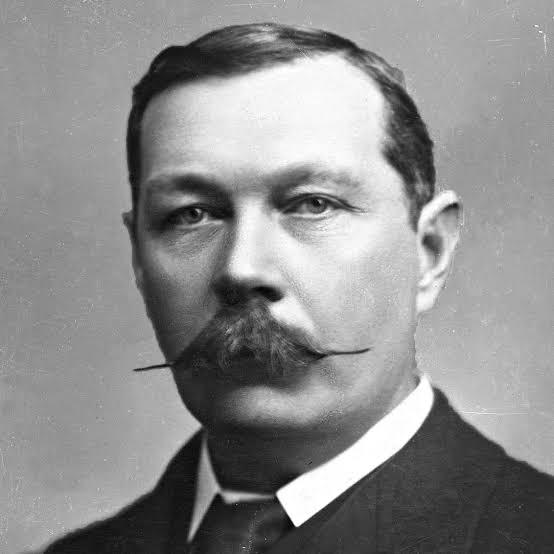
Forcing this spoon-fed, preconceived theory out of his mind, Sherlock returned to the scene of the crime to take a fresh look at the evidence. His discoveries led him in a drastically different direction, from which came an entirely different reconstruction of the events.
Confirmation bias can also occur in biblical interpretation. But when it relates to the Bible, we call it by a different name—eisegesis.
Eisegesis
Eisegesis means “to lead in.” It refers to the act of reading into the Scripture a preconceived idea. The method of Bible study outlined in this course has exactly the opposite aim from eisegesis—namely, exegesis, which means “to draw out.” The methods we have explored seek to dig in to the text of Scripture and draw out the meaning the author originally intended.
To read into the text is to bring some meaning or concept from outside the text to shape our reading of the text around that external idea. When paraphrasing the text, your commitment to this external idea will very often cause you to twist the logical flow of the text, and force it to say what it does not say.
This can certainly be intentional, even malicious, but it does not have to be. We can read elements into the text and be nearly unaware that we have done so. We simply have too many built-in assumptions, preconceived ideas, and predetermined categories that direct our thinking when we read. And so the call to heed this warning is not for “those other guys,” but for you and me.
There are four primary categories of external ideas that, when ‘read in’ to our paraphrase, could lead to a distortion of the logic of a passage.
- Theological agenda
- Ideas from another passage
- Your own ideas
- Someone else’s ideas
The example below zooms in on point number 4: Distorting the logic of a passage through eisegeting the ideas of another.
Example: Matthew 19:23–26
Consider this well worn (and thoroughly debunked) example concerning Jesus’ shocking statement about camels squeezing through needles.
There are two key issues with this interpretation. First, it totally destroys the shock of Jesus’ statement! We see this shocking intent brought to light in the interaction that follows (“Who then can be saved? It’s impossible with man!”). Second, it requires information from outside Scripture. To be clear, there is great value in learning all we can about the historical and cultural setting of the Bible. Such work can enrich our study of the Bible immensely. The issue is when some cultural detail becomes a sort of key that unlocks the meaning of a passage—and leads to a meaning that could not be found in the text itself.
Logic Gone Wrong
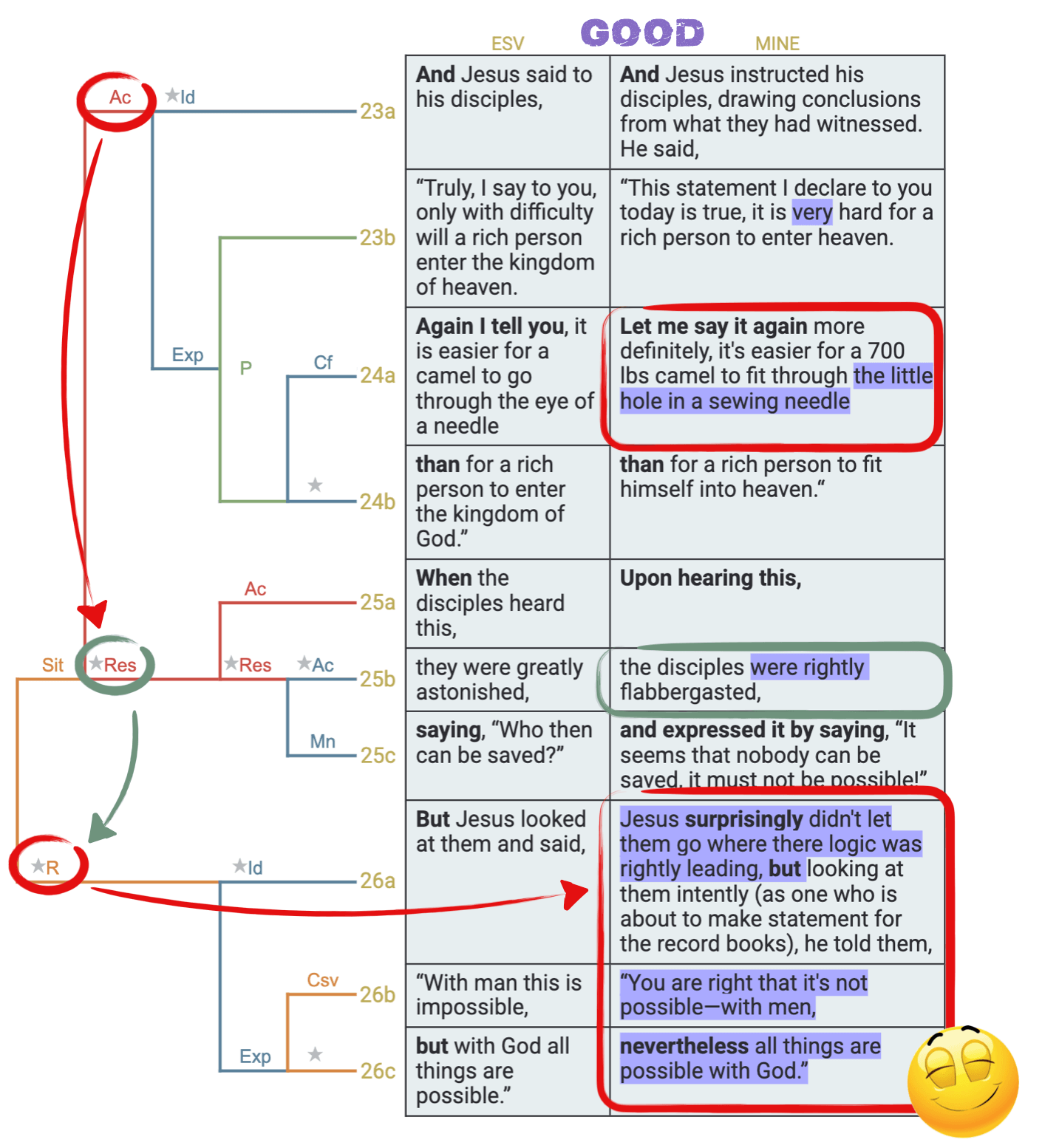
In the paraphrases below, the good paraphrase takes “eye of a needle” as literal and therefore salvation as literally impossible. Notice how, with this interpretation, the logic proceeds along a reasonable, undistorted track.
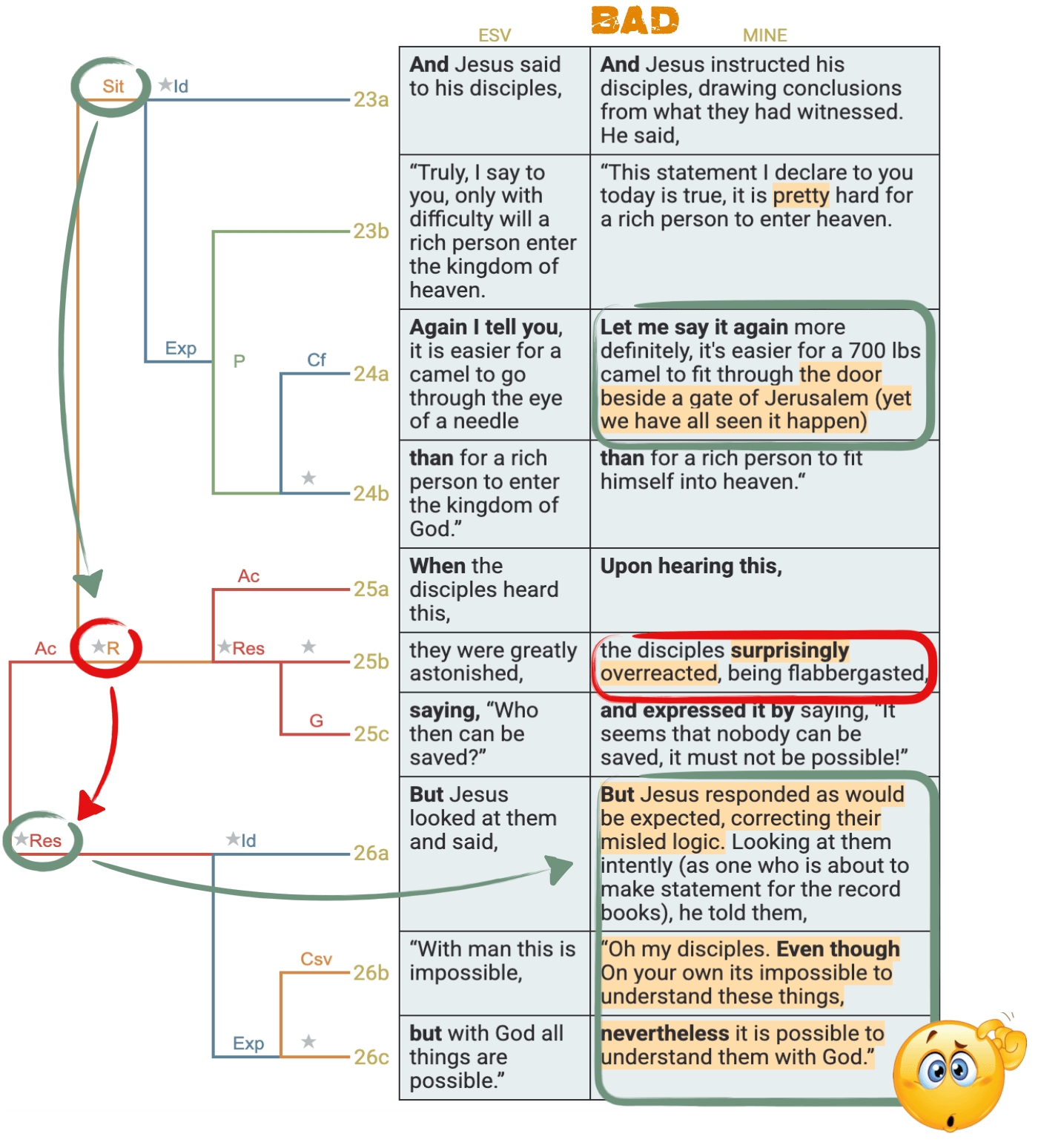
On the other hand, the bad paraphrase begins with eisegesis in 24a, interpreting “eye of a needle” as the door within a gate, thus making salvation by human effort seem possible. Notice how the logic of the paraphrase gets more and more twisted as it is traced downward throughout the rest of the passage.
Let’s take it step by step.
The bad paraphrase:
- 24a - Historical data is ‘read in’ by the paraphraser, making it seem like it's hard but possible to enter heaven.
- 25a - The disciple's response is concluded by the paraphraser to be an overreaction since Jesus isn't saying it's impossible to enter heaven.
- 26a - Jesus abandons the question of who can be saved and focuses on their inability to understand.
Do you see how the conclusion in 26b-c is forced in like a puzzle piece that doesn't fit?
The good paraphrase:
- 24a - The sewing needle imagery is drawn out, leading us to see that it is impossible to enter heaven.
- 25a - The disciples respond in shock because they rightly understand Jesus to say that no one can enter heaven.
- 25b - Jesus surprisingly steers them away from that conclusion to the real one—salvation is only possible with God.
Do you see how the conclusion in 26b-c fits best with the logic of the entire passage?