Lesson 4 | Grammatical Logic
Paraphrasing Participle Clauses
Participles offer a richness of logic wrapped in subtlety. They draw the reader to pleasantly reflect upon the broader context rather than mathematically spelling out every connection. But because of this, they also require careful consideration, lest we find ourselves taking the text where it was not intended to go.

The Rich Subtleties of Adverbial Participles
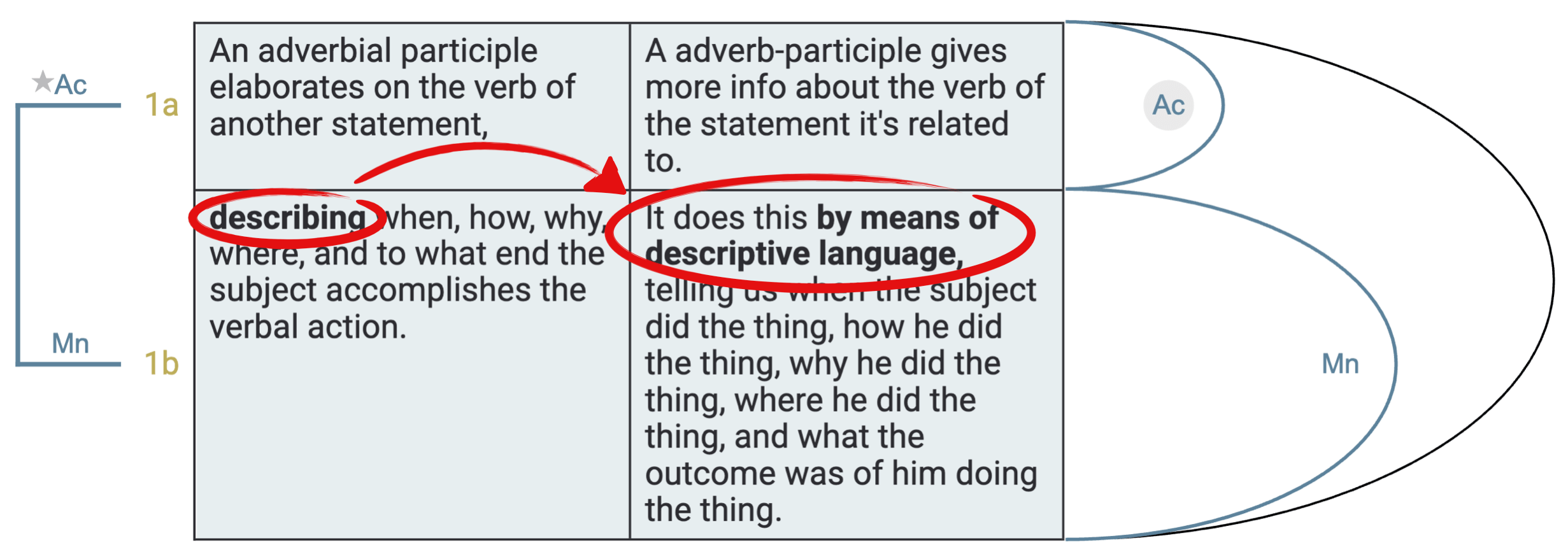
Since our paraphrases are to be expansive, it is highly appropriate that we make the most of adverbial participles. An adverbial participle elaborates on the verb of another statement, describing when, how, why, where, and to what end the subject accomplishes the verbal action.
If you are curious to see an adverbial participle in operation, the word “describing” in the previous sentence is an adverbial participle. Here’s the breakdown:
- subject - “an adverbial participle”
- verb - “elaborates on”
- participle - “describing”
In paraphrasing participles, the best way to test which conjunction to use is to consider what kind of question the participle clause answers. Referring to my sentence above, if I were to ask “How does an adverbial participle elaborate...?" the answer would be found in the adverbial participle—“By describing when, how, why, ...”
Paraphrasing Principle
When you paraphrase a grammatical marker like a participle (or a relative clause/prepositional phrase), use an explicit conjunction and clear verbal idea in the paraphrase whenever possible.
A Sampling of Common Examples¹
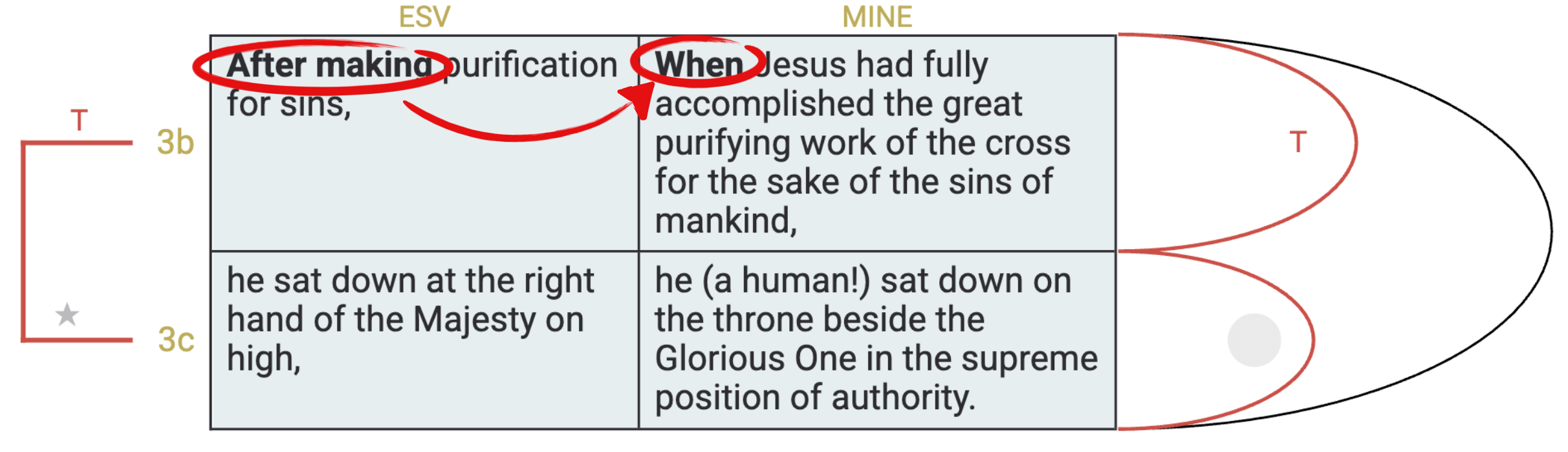
Temporal: Hebrews 1:3
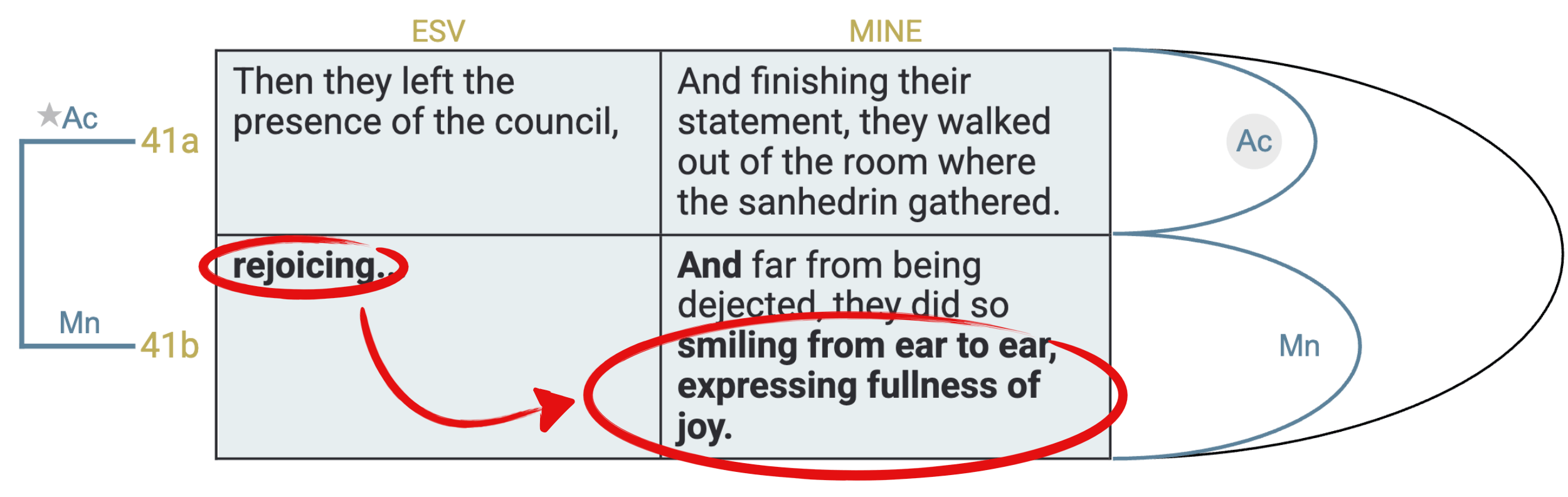
Manner: Acts 5:41
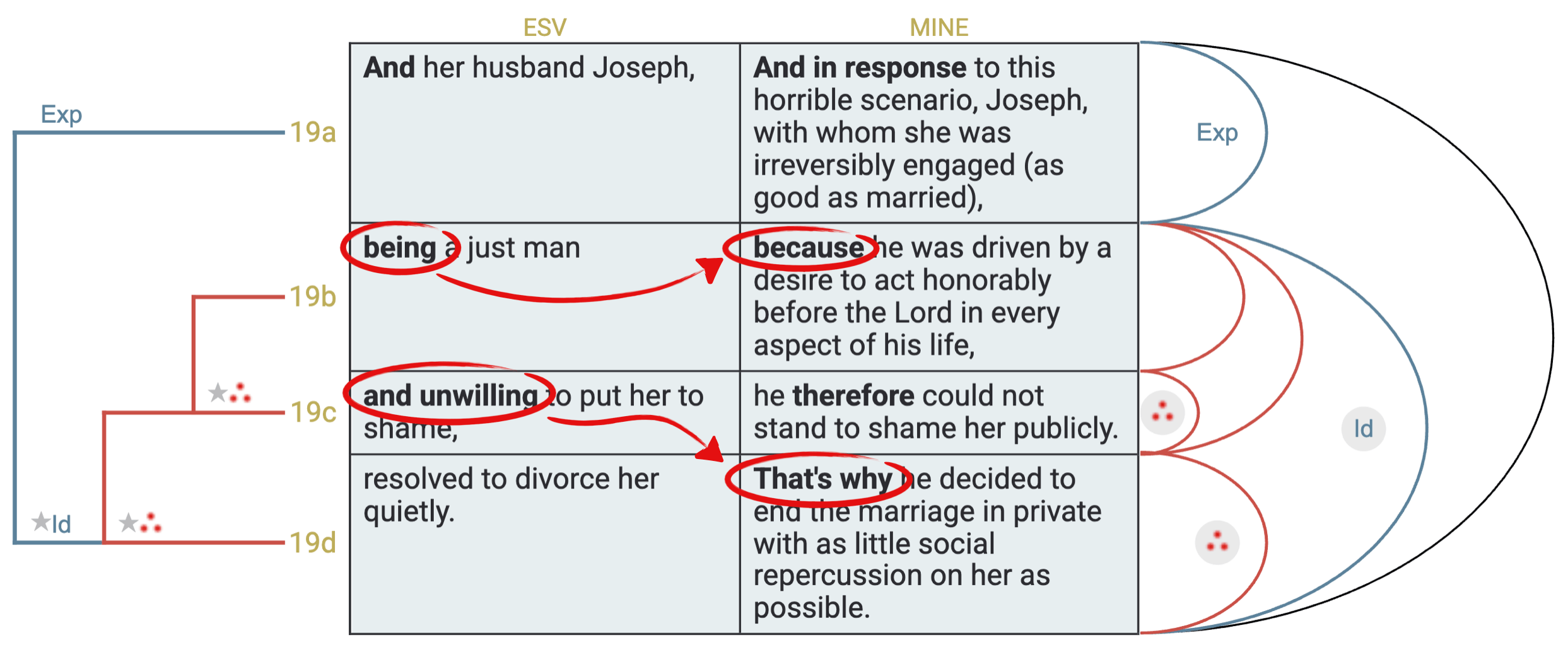
Ground: Matthew 1:19
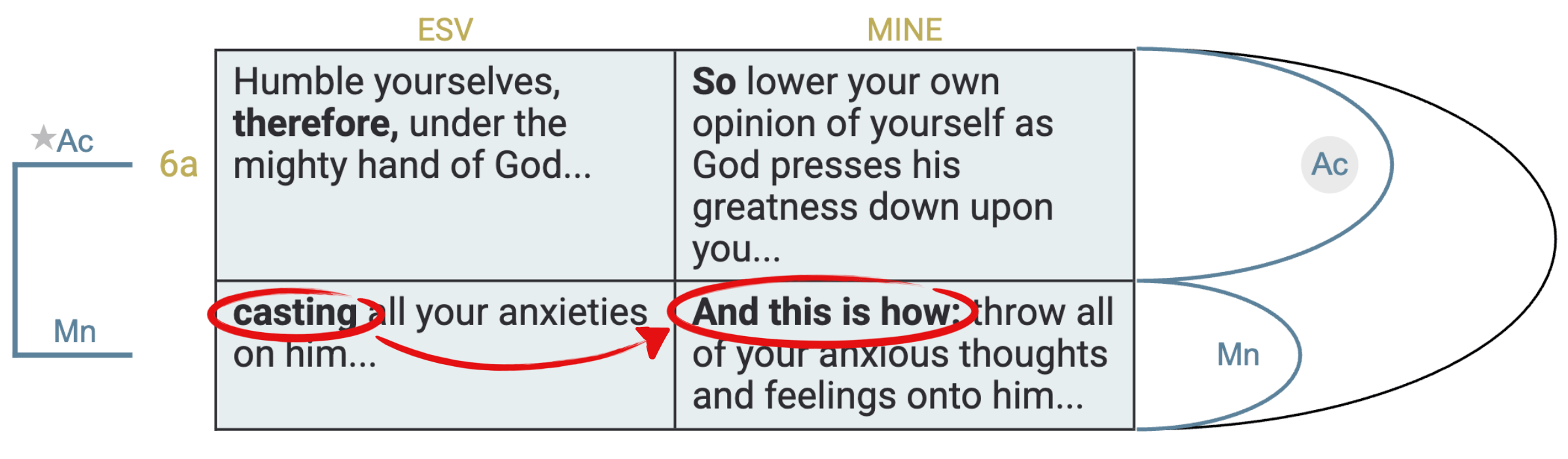
Means²: 1 Peter 5:5-6
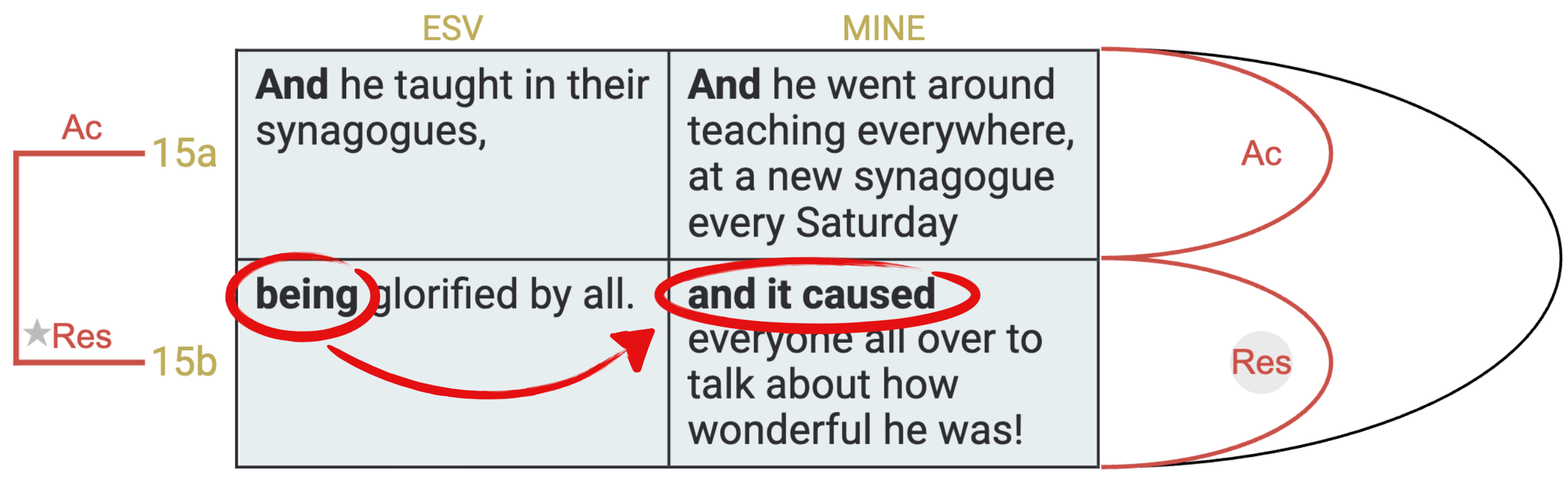
Result: Luke 4:15
This sampling represents the most common uses of participles. (Concessive and Purpose are also possibilities, though much lesson common.)